
Cenote Diving in Tulum: Complete Guide to Cavern Diving in Mexico's Riviera Maya

Light beams curtain the cenote entrance of Coral (Photo by Alvaro Herero)
Planning a dive trip to Mexico's Riviera Maya? Yes!, of course! Why? well we all know the answer: Cenote Diving in Tulum offers some of the world's most spectacular underwater experiences — crystal clear water, dramatic light beams, and ancient limestone formations. Here's everything you need to know about safe cenote cavern diving tours. (so yeah, book that trip now!)
Understanding Mexico's Underwater Caves. What is Cenote Diving?
Cenote Diving refers to recreational scuba diving in the cavern zones of Mexico's extensive underground cave systems, and for taKing this tour you only need you Open Water Certification. The word "cenote" comes from the Mayan word "dzonot," meaning sacred well — and for good reason. These natural freshwater pools were the only water source for ancient Maya civilizations on the Yucatan Peninsula.
The Difference Between Cenotes, Caverns, and Caves
Understanding the terminology matters for safety and setting expectations:
CENOTES are the surface openings — natural sinkholes where the limestone ceiling has collapsed, providing access to the water-filled passages below. Not all cenotes have diveable caverns or caves connected to them. Some are simply beautiful swimming holes, while others are gateways to vast underground systems.
CAVERN ZONES are the areas within 60 meters (200 feet) of open water where natural light is visible. This is where recreational divers explore during guided cenote tours in Tulum. These spaces are wide, open, and specifically chosen for their safety characteristics.
CAVE SYSTEMS extend beyond the cavern zone into complete overhead environments requiring specialized cave diving training, equipment, and certification. The Riviera Maya contains some of the world's longest underwater cave systems, with hundreds of kilometers of surveyed passages.
How Cenotes were Formed in the Yucatan Peninsula
The cenotes we dive in Tulum and throughout the Riviera Maya formed over millions of years through a fascinating geological process. The Yucatan Peninsula is essentially a massive limestone platform - the remains of ancient coral reefs from when this area was beneath a prehistoric ocean.
As rainwater, slightly acidic from dissolved CO2 in the atmosphere, percolated through the porous limestone, it slowly dissolved the rock, creating underground drainage systems and cave passages. During ice ages when sea levels dropped significantly, these passages were air-filled caves. Without water pressure supporting them, many ceiling sections collapsed, creating the cenote openings we see today. At this time, the spectacular stalactites and stalagmites formed (needing the caves to be dry or at least not flooded).
When sea levels rose again, the caves flooded, creating the pristine underwater environments we now explore. The Yucatan Peninsula has over 6,000 known cenotes.
Is Cenote Diving Safe? Safety Guidelines for Cavern Tours in Tulum
This is the most common question I hear from divers considering their first Cenote Diving experience in Mexico: "Is it safe?" The short answer: “Yes, it is”. When done properly with certified guides following established safety protocols. Accidents have happened in the past, but occurred when the rules were seriously disregarded.
The longer answer: Diving into overhead environments like caverns or caves without proper training and equipment can be extremely dangerous. However, guided cenote cavern diving is specifically designed to allow recreational divers to safely experience these environments through strict adherence to cavern diving rules.
Professional Guide Requirements for Cenote Diving
Every cenote diving tour in Tulum must be led by a guide with specific qualifications:
Minimum requirements:
Divemaster certification or higher
Full Cave Diver certification
Complete cave diving equipment setup
Extensive knowledge of the specific cenote being dived
At Cave Diving Adventures, all guides exceed these minimums and are registered with CREER the local safety, education and conservation committee. As an active cave explorer and surveyor, I bring years of experience mapping and exploring these exact systems as well as my experience training cave divers.
The Cavern Diving Rules: Your Safety Framework
Guided cenote diving follows strict rules established by cave diving training agencies and the local safety committee, CREER:
Permanent guideline: We always follow a continuous guideline from open water through the cavern and back. This line serves multiple purposes:
Navigation reference if visibility deteriorates
Keeps divers in appropriate areas, protecting formations
Provides immediate exit route in any emergency
Rule of thirds gas management: Your gas supply is divided into thirds:
One-third to penetrate into the cavern
One-third to exit back to open water
One-third reserved for emergencies
You should always surface with at least one-third of your starting gas remaining. This conservative approach provides massive safety margins.
Maximum distance: Cavern diving never exceeds 60 meters (200 feet) from open water. In reality, most cenote tours in Tulum stay well within this limit, ensuring open water is always nearby.
Maximum Depth : Cenote diving has a depth limit of 30 meters (100 feet), however most cenotes are shallower.
Natural light: The cavern zone always maintains some connection to natural light, though in deeper cenotes this may only be visible when the sun is directly overhead.
Open spaces: Cavern diving routes use wide, spacious passages where two divers can comfortably swim side-by-side. There are no tight restrictions or squeeze passages in recreational cenote diving.
Small groups: Maximum group size is 3-4 divers depending on the cenote, ensuring personalized attention and easy management.

The light beams at Cenote Taj Mahal (Photo by Alvaro Herero)
Best Cenotes to Dive Near Tulum and Playa del Carmen
The Riviera Maya offers dozens of incredible cenote diving sites, each with unique characteristics. Here are some of the most spectacular:
Cenote Angelita: The Famous Underwater Cloud
Located south of Tulum, Angelita is one of the most surreal cenote dives in Mexico. This deeper bell-shaped cenote (30+ meters) features an extraordinary hydrogen sulfide layer at around 30 meters depth that looks exactly like a cloud suspended in the water. Dead trees emerging from this "cloud" create an otherworldly scene that's become iconic in underwater photography.
Best for: Experienced divers comfortable with deeper depths, underwater photographers
Dos Ojos Cenote: Majestic Formations and Crystal Clarity
Perhaps the most famous cenote diving site in Tulum, Dos Ojos ("Two Eyes") offers multiple cavern dive routes featuring massive stalagmites, columns, and stalactites. The water clarity is extraordinary — visibility often exceeds 100 meters. The Barbie Line route showcases spectacular formations with relatively shallow depths, perfect for newer cenote divers.
Best for: First-time cenote divers, all experience levels, formation photography
The Pit Cenote: Cathedral of Light
The Pit is renowned for its dramatic light beams that penetrate the cavern when conditions are right. This deeper cenote features a massive chamber that feels like an underwater cathedral. The hydrogen sulfide layer and halocline effects create stunning visual layers in the water column.
Best for: Photographers seeking light beam shots, experienced divers
Cenote Carwash: an underwater garden
Carwash was one of the first cenotes dove by cave divers visiting from Florida in the early 1980s. It has a large open water pool with water lilies growing up from the bottom, plenty of fish and turtles. The view back to the open water from the cavern is spectacular!
Best for: Photographers seeking interesting shots, divers who are not sure if they will like cenote diving
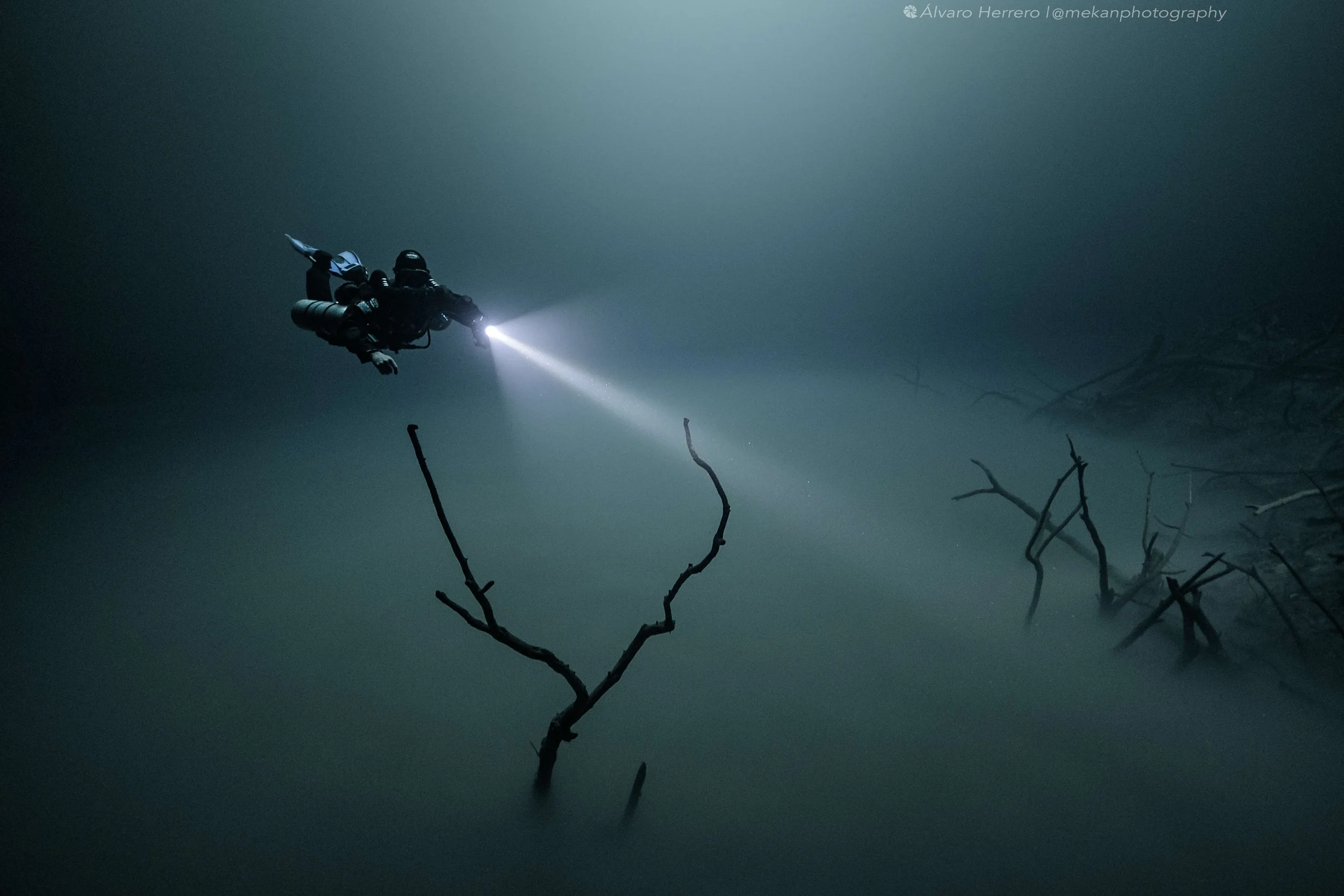
Floating about the cloud at Cenote Angelita (Photo by Alvaro Herero)
Who Can Go Cenote Diving? Certification Requirements
The minimum requirement for cenote cavern diving is Open Water Diver certification (or equivalent from any recognized training agency). That's it, you don't need advanced certifications or cave diving training to experience these incredible environments on guided tours.
However, I recommend:
Ideal prerequisites:
20+ logged dives (comfort and buoyancy control matter)
Experience with buoyancy in different environments
Comfortable diving to 18-30 meters (depending on cenote)
Good physical fitness for entry/exit at some cenotes
Being Nitrox certified
What about Advanced Open Water? While not required, having your Advanced Open Water certification helps, particularly for deeper cenotes like Angelita. The deep dive training and additional experience make those dives more enjoyable.
Equipment needs: You typically only need your basic scuba gear, I can provide full equipment rental if you're traveling without gear. I provide all necessary dive lights for cenote diving.
What Makes Cenote Diving Different from Ocean Diving?
Cenote diving in the Riviera Maya offers a completely different experience from ocean diving:
Crystal clarity: Visibility in cenotes regularly exceeds 50-100 meters, or as far as your light beam reaches! There's no comparison to ocean diving — the water is so clear it's disorienting at first.
Freshwater diving: Most cenote diving occurs in freshwater or the freshwater layer above the saltwater halocline. This means different buoyancy characteristics than ocean diving.
Temperature stability: Cenotes maintain consistent 24-25°C (75-77°F) year-round. No thermoclines, no seasonal variations.
Geological focus: Instead of marine life, you're experiencing dramatic rock formations, light effects, and ancient geological processes. It's about the environment itself.
Overhead environment: Even in cavern zones, you're in an overhead environment. This means we are mostly reliant on our dive lights for lighting the environment.
Dramatic lighting: The interplay of natural light, darkness, and dive lights creates photographic opportunities impossible in ocean diving.
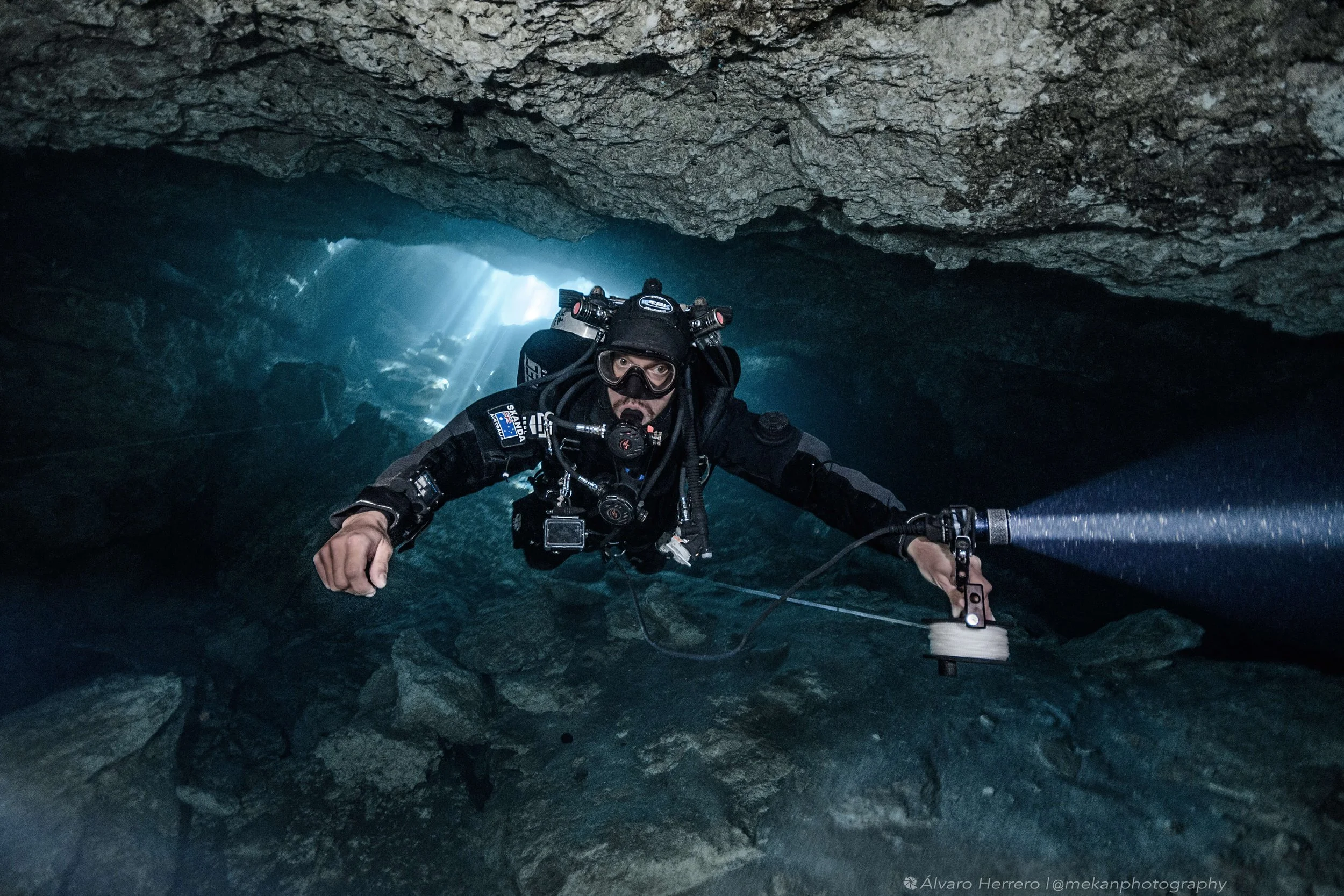
Running the reel down to a cavern line. (Photo by Alvaro Herero)
Frequently Asked Questions About Cenote Diving in Tulum
What's the best time of year for cenote diving?
Year-round! Unlike ocean diving which can be affected by weather and seasons, cenote diving in Mexico offers consistent conditions 365 days a year. Water temperature remains stable at 24-25°C, and cenotes are protected from surface weather conditions.
For dramatic light beams: Visit between April and August when the sun is higher in the sky, creating more dramatic light penetration into cenotes.
Do I need a wetsuit for cenote diving?
Most divers find a 3mm wetsuit comfortable for cenote diving in Tulum. The water is 24-25°C (75-77°F), but longer dives and the lack of sun exposure can make you feel cold. Some divers prefer 5mm suits, especially for deeper or longer cenote dives.
Can beginners do cenote diving?
Yes! Open Water certified divers can participate in guided cenote cavern diving. However, I strongly recommend having solid buoyancy control and at least 15-20 logged dives before attempting cenote diving. Contact in these environments can damage formations that took thousands of years to form.
How deep are cenote dives?
Most cavern dives in Tulum cenotes range from 6-15 meters (25-50 feet) average depth. Some cenotes like Angelita and The Pit involve descents to 30 meters (100 feet). All cenote dives will be down to a maximum of 30m (100 feet)
What happens if I panic or have a problem during a cenote dive?
This is why the cavern diving rules exist. You're always:
Within 60 meters of open water
Following a continuous guideline to the exit
With a highly trained cave diving guide
In wide, open passages with space to maneuver
Diving with conservative gas reserves
If any issue arises, your guide can quickly escort you back to open water following the guideline.
Environmental Responsibility: Protecting Tulum's Cenotes
The cenotes of the Riviera Maya are fragile ecosystems that require our protection:
Perfect buoyancy is essential: Even slight contact can damage formations that took thousands of years to develop. Before diving cenotes, ensure your buoyancy control is excellent. This is something we will check on the first dive, along with weight checking.
No touching: Formations, walls, or floor. Oils from human skin damage formations and leave visible marks. Look, photograph, but don't touch.
Proper weighting: Being correctly weighted prevents accidental contact and makes the dive more enjoyable.
Reef-safe sunscreen and natural insect repellents only: Better yet, no sunscreen before cenote diving. What's on your skin enters this pristine freshwater ecosystem.
Every diver has a responsibility to leave these environments exactly as they found them—pristine and unchanged for future generations.

Stalactites and columns on a cavern tour. (Photo by Alvaro Herero)
From Cenote Diving to Cave Diving: The Natural Progression
Here's a confession: cenote diving is addictive. Many cave divers I know started their journey with a guided cenote tour and immediately wanted more.
If you find yourself dreaming about those passages that continue beyond the cavern zone, wondering what's around that corner past the daylight zone, it might be time to consider cave diving training.
The progression typically looks like:
Guided cenote cavern diving (where you are now)
Technical training in sidemount or doubles
Cavern Diver certification (first level of overhead training)
Intro to Cave or Basic Cave certification
Full Cave Diver certification
Advanced cave specialties (stage diving, DPV, survey, CCR cave)
At Cave Diving Adventures, I've trained dozens of divers through this progression. Some just wanted to see a bit more of the cenotes independently. Others have gone on to become explorers themselves, participating in actual cave exploration and survey projects.
The Riviera Maya is the perfect place for cave diving training: consistent conditions, world-class cave systems, experienced instruction, and an infrastructure built around cave diving education.
Why Cenote Diving Should Be on Every Diver's Bucket List
After thousands of dives in Tulum's cenotes, I'm still amazed every single time I descend into these systems. There's something magical about swimming through crystal-clear water where you can see 100+ meters, watching light beams dance through openings above, and experiencing formations that took millennia to create.
Cenote diving in Mexico's Riviera Maya offers something available almost nowhere else on Earth: a place where recreational divers can safely explore genuine underwater cavern environments without specialized training. The combination of accessibility, safety, and spectacular beauty is unique.
Whether you're a newly certified Open Water diver looking for your next adventure, or an experienced technical diver who somehow hasn't made it to Tulum yet, guided cenote tours offer an unforgettable experience.
Fair warning: your first cenote dive will probably change how you think about diving. Ocean diving is incredible, but there's something about the clarity, the formations, the history, and the otherworldly nature of cenotes that gets into your blood.
Many of my Full Cave students trace their journey back to a single guided cenote tour years earlier. They came to Tulum for the beaches, took a cenote dive on a whim, and found themselves planning their cave diving career before they even left Mexico.
Book Your Cenote Diving Experience in Tulum
Ready to experience cenote diving in Tulum with an expert guide who's an active cave diver, explorer and cave diving instructor?
Cave Diving Adventures offers guided cenote tours for all experience levels:
First-time cenote divers: We'll introduce you to these environments safely
Experienced divers: Access to less-crowded cenotes and advanced sites
Underwater photographers: Guidance on optimal positioning and lighting
Aspiring cave divers: See what cave diving training could open up for you
Small groups (maximum 3 divers), personalized attention, and guidance from someone who has years of experience cave diving. This isn't mass tourist-level cenote diving, this is quality guiding with an experienced cave instructor.
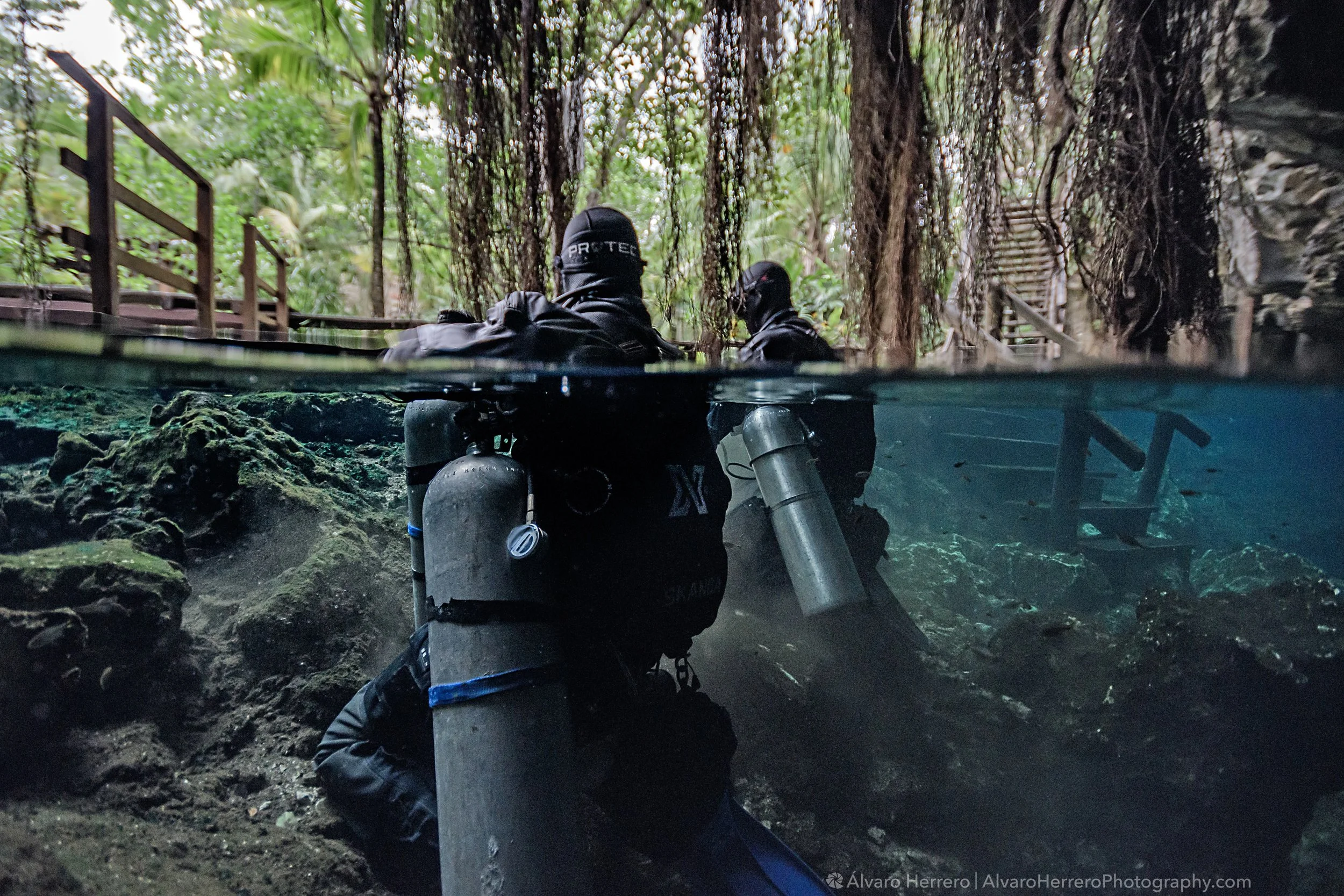
Ready to explore Mexico's cenotes? Contact Cave Diving Adventures to book your guided cenote diving tour or discuss cave diving training options.
