
Caterpillar Cave System: Exploring the Underground Giant of Muyil
Discover the hidden depths of Sistema Caterpillar - Mexico's 33-kilometer underwater cave network near Tulum.

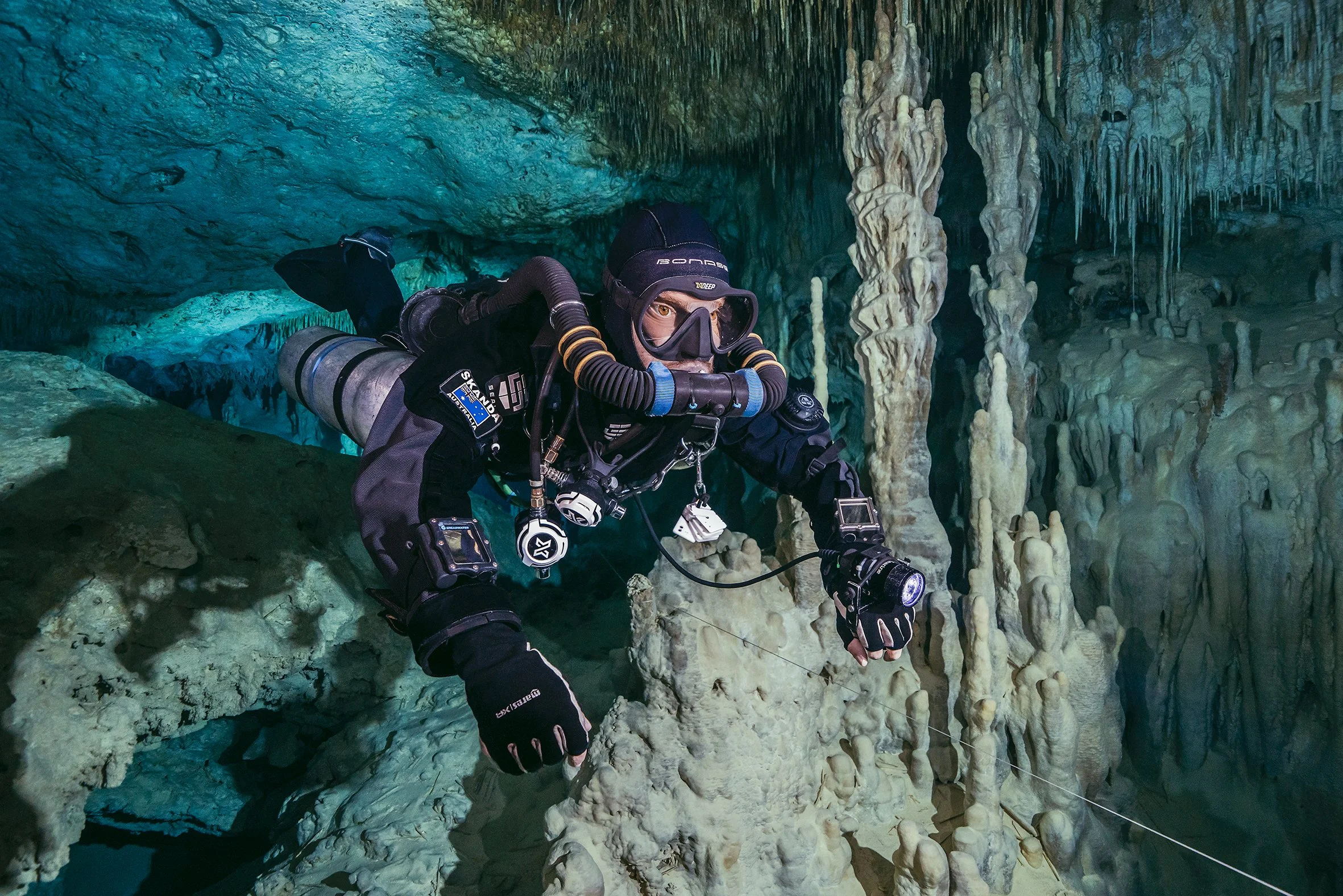
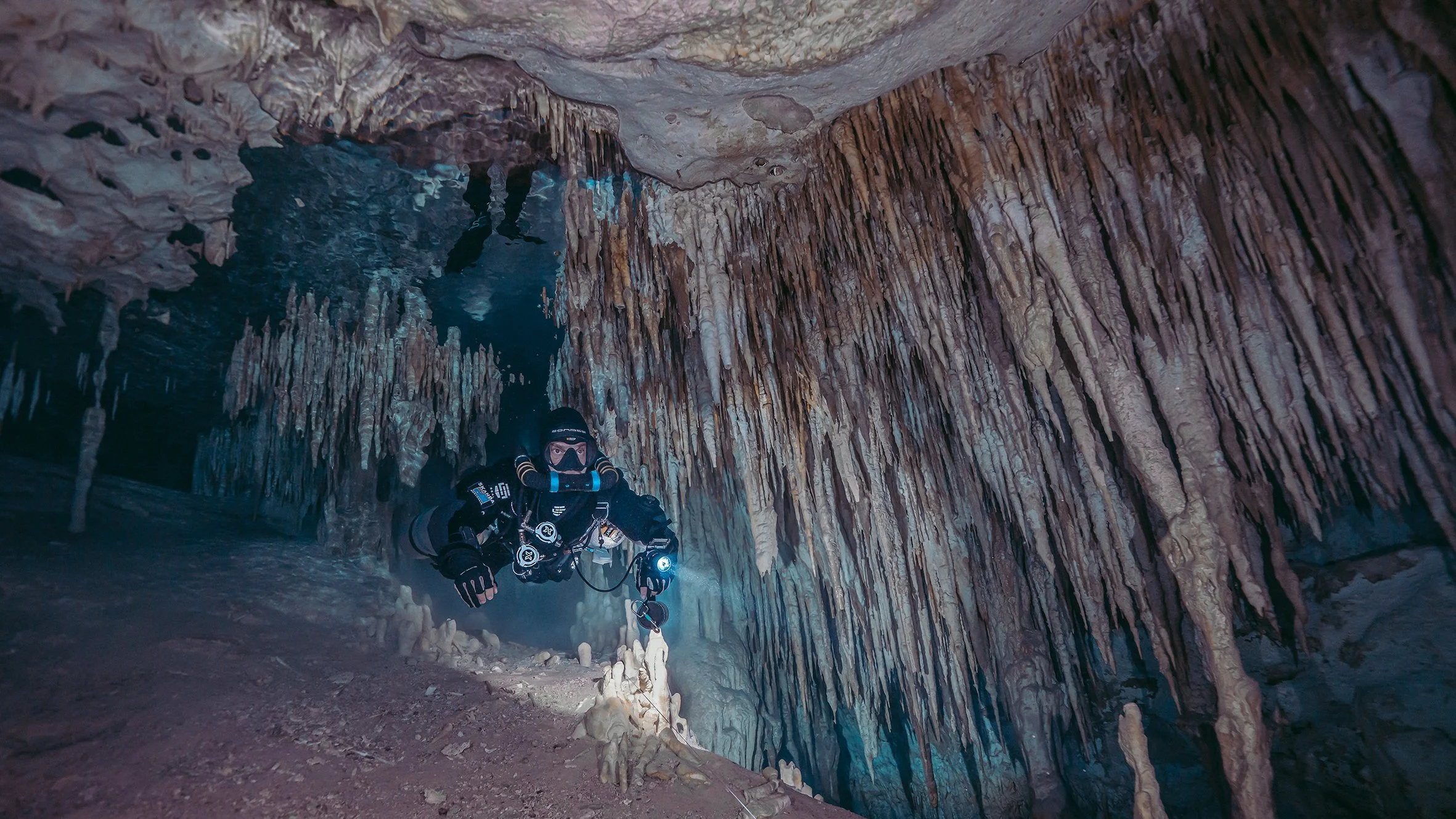
The first room in Cenote Xulo, author diving his KISS Sidewinder Rebreather (Photo by Alvaro Herero)
Welcome to Cenote Caterpillar: Where Adventure Begins
Stepping out of the truck into the sunlight, the heat hits like a hammer.
Looking around, I am in a sandblasted moonscape - bare limestone, piles of rubble and a slope up to the jungle on each side.
Turning, I see a hole in the ground, some scummy green water in the bottom: Welcome to Cenote Caterpillar!

Posing on the way to the deeper section of Cenote Xulo, many of the caves of Muyil have short deeper sections! (Photo by Alvaro Herero)
Muyil: The Gateway to Underground Exploration
Twenty minutes drive south of Tulum is the sleepy town of Muyil. Once a pretty quiet place, with visitors stopping at the small archeological site or taking a boat tour on the lagoons, it has since grown due to the construction of the Felipe Carrillo Puerto Airport (the new Tulum airport). Unlike the stretch of coastline between Playa del Carmen and Tulum, there are no cenotes here for recreational cavern tours. (link to other article). There are however three significant cave systems - Sistema Doggie (16 km) , Sistema Nohoch Pek (25 km) and Sistema Caterpillar (33km). So there are many cenotes around Muyil, they are just not the picturesque entrances with crystal clear water like those further north!

Sidemount configuration has some advantages over backmount units when the cave gets small! (Photo by Alvaro Herero)
The Accidental Discovery: A Dog's Adventure Leads to Cave Diving History
How Cenote Caterpillar Was Found
Cenote Caterpillar itself was explored by divers from the Quiet Diver Team - Sebastien Kister, Alvaro Roldan, Phillip Lehman, Kim Davidsson, Tristan Ternat, Mauro Borodogn, Patrick Widmann. It was discovered by accident, when during diving and exploring at nearby Cenote Doggie, the pet dog of Sebastien ran off into the jungle. The divers called and called but it didn’t come back, so they went out looking for it, and turned down a small overgrown road into an old, disused quarry. Here they discovered a small pool, where when the quarry had been operational the digging machines had accidentally broken into a section of the flooded cave, exposing it to air.
Principal Exploration and Mapping
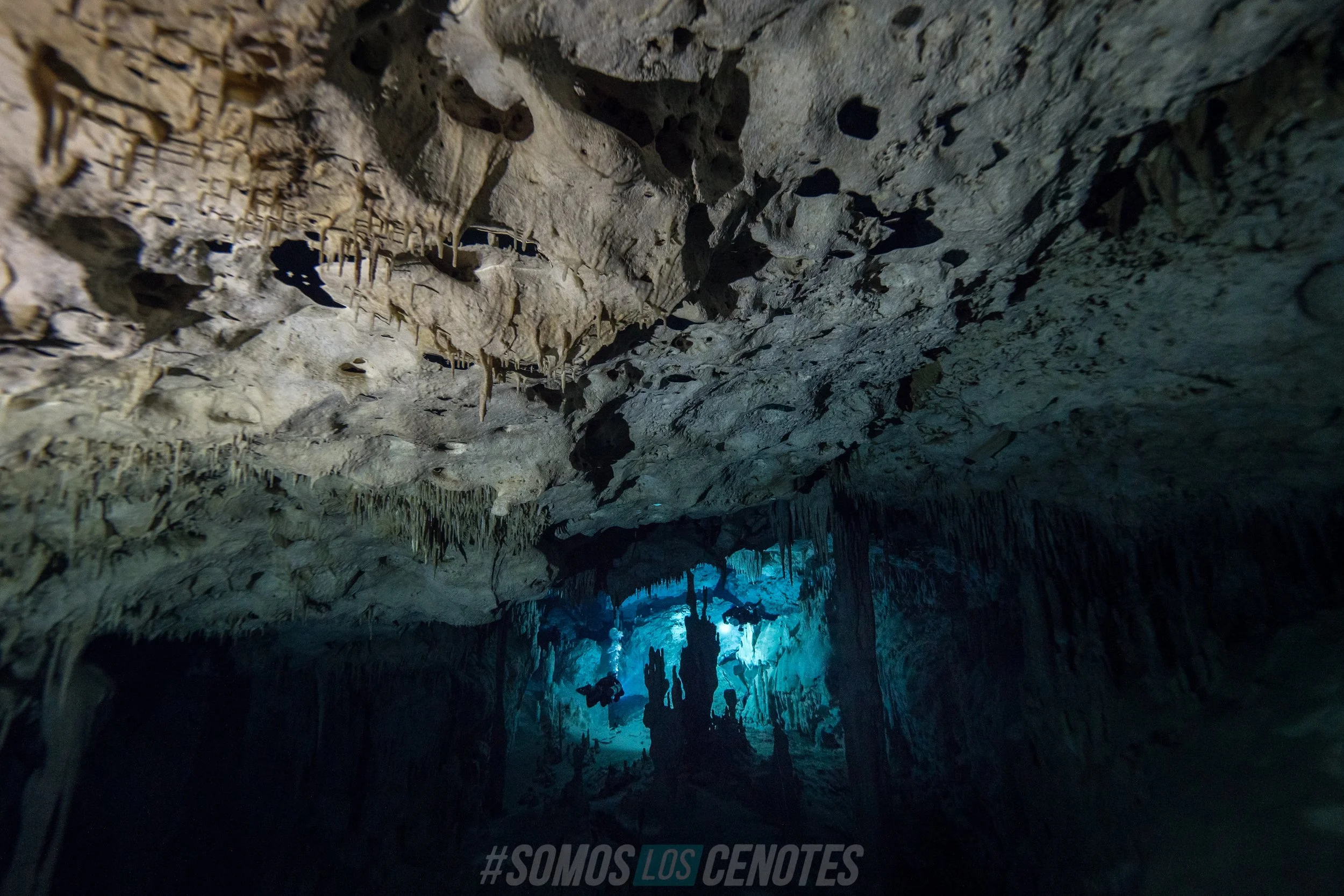
Decorated rooms are the norm cave diving in Sistema Caterpillar (Photo by Alfred Minnaar)
The principal exploration from Cenote Caterpillar happened in 2012 after its discovery. And the above divers were involved as well as Nadia Berni and David Seiff (diving downstream). It was connected to the neighbouring Cenote Xulo (the history of exploration can be read about here). Cenote Xulo is an easily accessible entrance to the system, and stunning cave. While it is possible to traverse to the Caterpillar entrance now, it is something that shouldn’t be done with more than sidemount as the tunnel is small and decorated (and in some places a very low bedding plane). Attempting to take multiple stages through has caused quite some damage to the cave and destroyed fragile speleotherms.
The most epic DPV Cave video ever, and showcase of the Ho Lee Sheet Tunnel in Sistema Caterpillar.
The Cave System Expands: Connecting the Underground Network

Surveying out after a exploration dive, on a rebreather there is better visibility! (Photo by Alvaro Herero)
There are many cenotes connected to this cave system, but not all of them are accessible being on private property or tiny cave entrances in the jungle. La Bajada is a cenote downstream from Cenote Caterpillar. It was first explored by Alvaro Roldan in 2013 who connected it to the downstream lines of Caterpillar. This is a cenote that is not accessible for diving, being on private property a good twenty minutes hike into the jungle. While Alvaro worked to connect the cenote to Caterpillar, Mauro, Phillip and Patrick explored the cave the other direction along the ‘Insect’ and ‘Sting!’ lines. And then finally was connected to the neighbouring Baba Yaga lines that had been explored by Kim, Andrea Gruber and Tjibbe Bosma. More recently I used Cenote La Bajada as an entry point to work towards a connection with the neighbouring Sistema Doggie. Over a series of long rebreather and scooter dives the distance between the systems got closer (but is still around five hundred meters away from one another).
Baba Yaga is another cenote, so named because of the ‘myth’ around the character played by Keanu Reeves in the John Wick series of films. This was explored by Kim Davidsson, Andrea Gruber and Tjibbe Bosma. Tristan connected Galaxian into the Caterpillar cave system through Cenote Baba Yaga. At that time, he hadn’t seen the cave data, so didn't know there was another explored cave between Caterpillar and La Bajada.
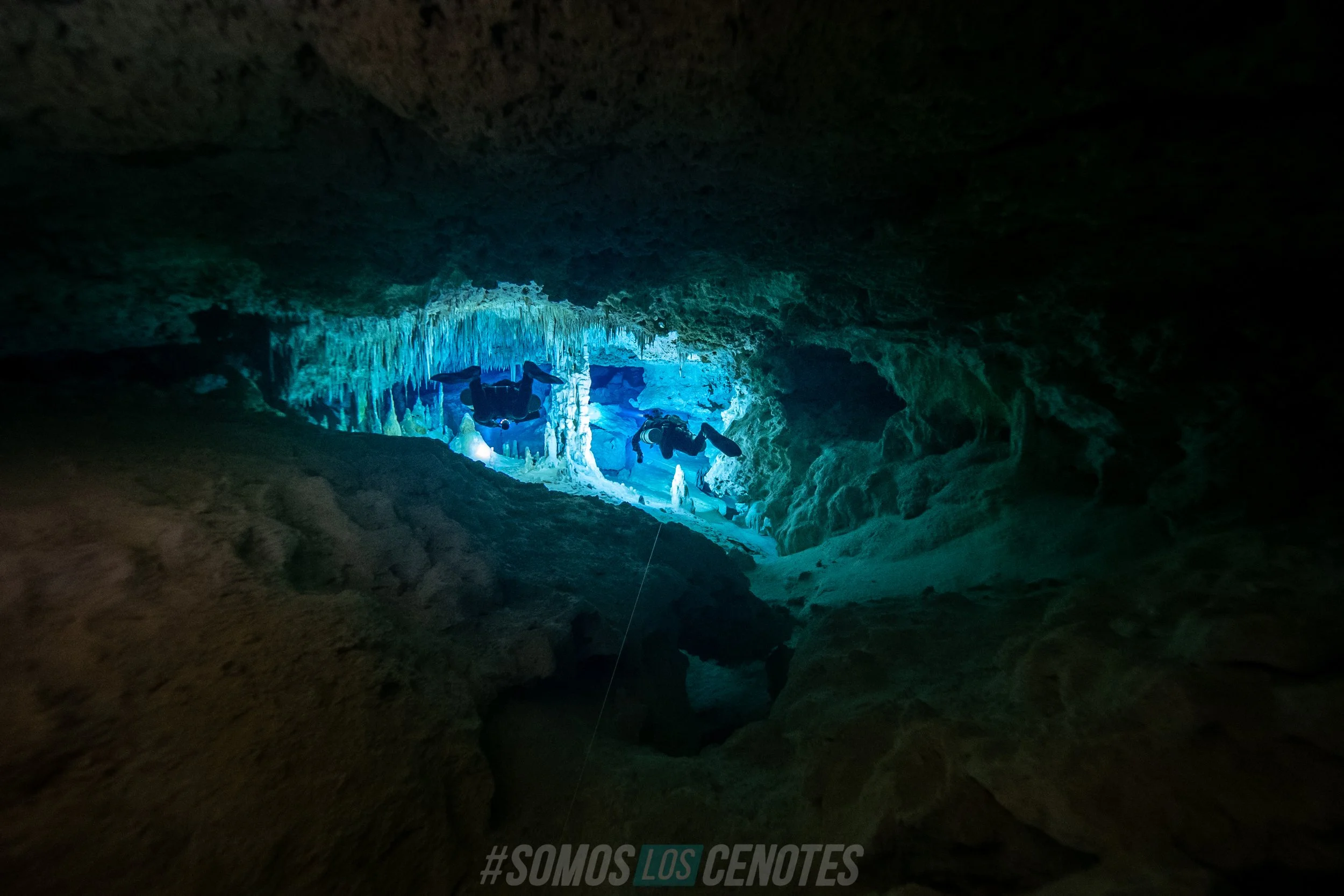
Galaxian and the Nest
Galaxian is one of the accessible cenotes in the system, the land owner Camaal Pastor is contactable for diving access. The cenote is a short walk along a trail, and then a bit of a hassle to get tanks through a small dry cave to the water. You have to bring tanks down one by one, and it helps if one diver can stand in the water and receive the tanks and then clip them off to the rope left there for that purpose. I have done this once by myself, and it was very hard work! The surface pool has just enough room for two dives to put on their sidemount tanks. The cave here spreads in all directions and is really quiet varied!
The connection between Galaxian and the Nest was the goal for me on my first dive with the QDT / DRSS team! I had been resurveying and exploring, but hadn’t been invited along on a team exploration dive until that point. I was sent off on the mission to try to connect Galaxian to the Nest, a neighbouring cenote with more challenging access. I did manage to get to where I was supposed to be that dive, and laid a bit of line in new cave, but missed the lead that the others had wanted me to push. So on another exploration day Tristan Ternat went back and followed his lead. It we in the right direction and he was able to connect in with the cave line coming from Cenote The Nest.
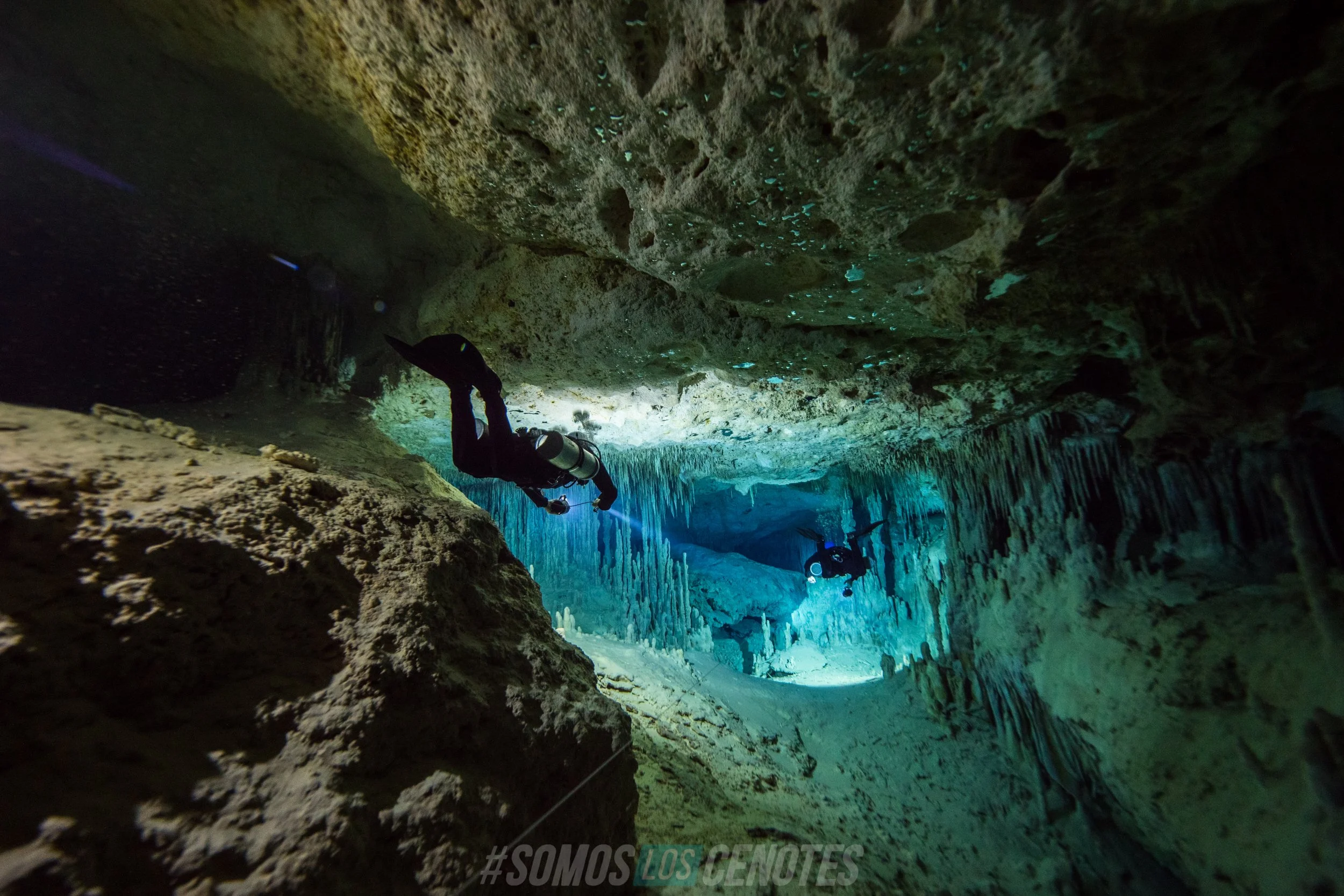
Wider cave passages often shrink down and get smaller before becoming bigger again. (Photo by Phillip Lehman)
Current Status: 33 Kilometers of Explored Cave
Through systematic exploration and connection projects, Sistema Caterpillar has grown to over 33 kilometers of mapped underwater passages, making it one of the longest cave systems in the Yucatan Peninsula and the most southerly major cave diving destination in the region.
Ongoing Mysteries and Future Exploration
Several questions drive continued exploration efforts:
Hydrology: Does the system flow into Muyil's coastal lagoons?
Water Sources: Where does the cave's water originate?
Expansion Potential: How much more cave awaits discovery?
Want to dive some of these cenotes ?
I know many of these caves very well, having been involved in surveying and exploring, and can take you off the beaten track!
