
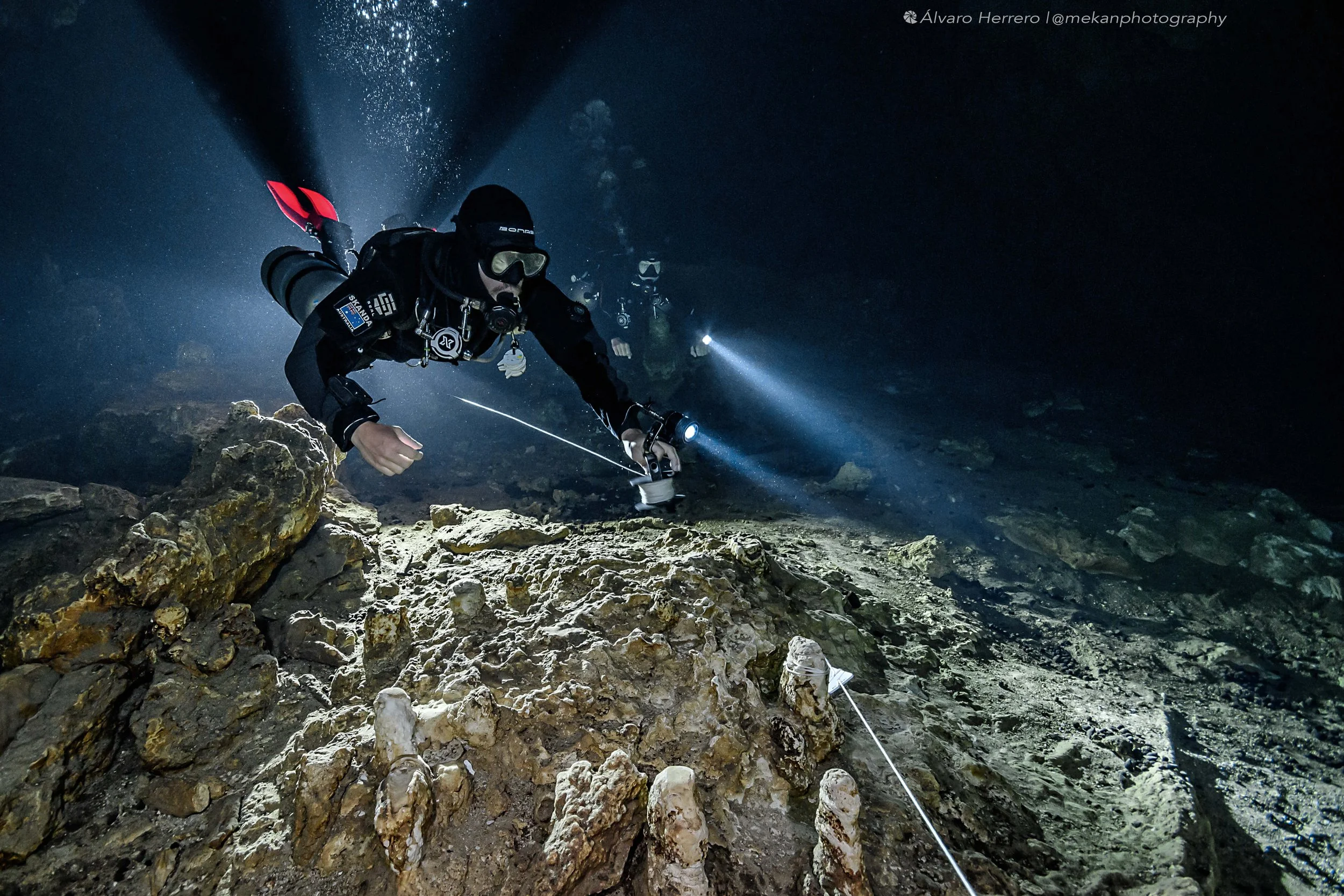
Underwater classroom with Skanda Coffield-Feith. Students learn and practice one of the core cave diving techniques: securely connecting their safety reel to the main cave line under expert instruction.
WHAT IS THE TRAINING PATHWAY TO BECOME A CAVE DIVER? Many people contact me wanting to become cave divers one day but aren't sure what steps they need to take to get there. Here's the pathway I recommend, based on 12+ years of diving and teaching.
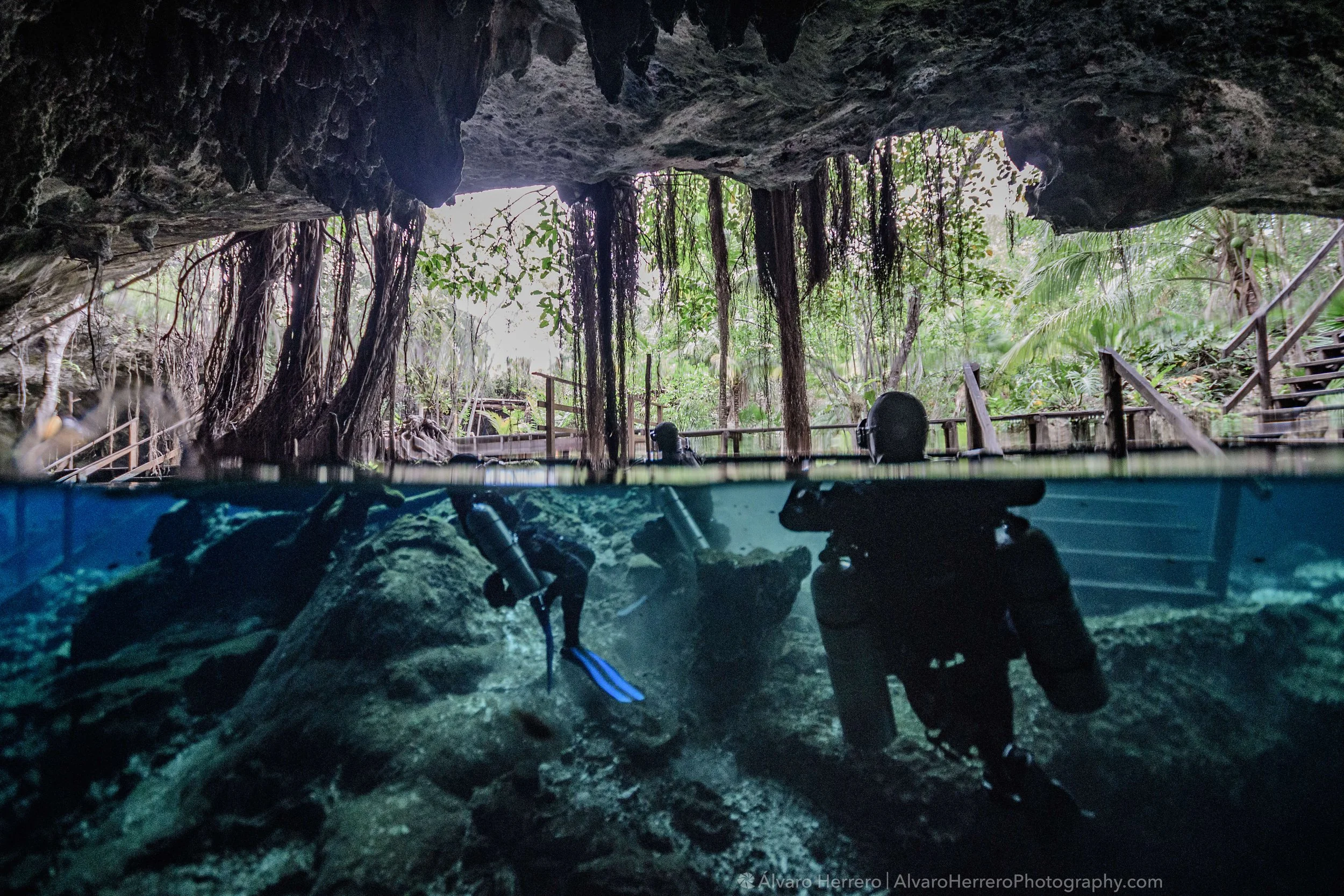
Sidemount divers preparing for a cave dive
Recreational Diver Levels
As divers start out, they typically complete their Open Water course, then their Advanced Open Water course. For cave and technical diver training, divers need to be trained and comfortable diving in a configuration that gives them redundancy — Sidemount or Twinset.
Many training agencies set their prerequisites for further training at just Open Water certification and 25 logged dives. I don't think this gives divers enough experience or in-water practice, so for anyone wanting to learn Sidemount or Twinset, I recommend being Advanced Open Water and Nitrox certified with at least 50 dives of experience first.
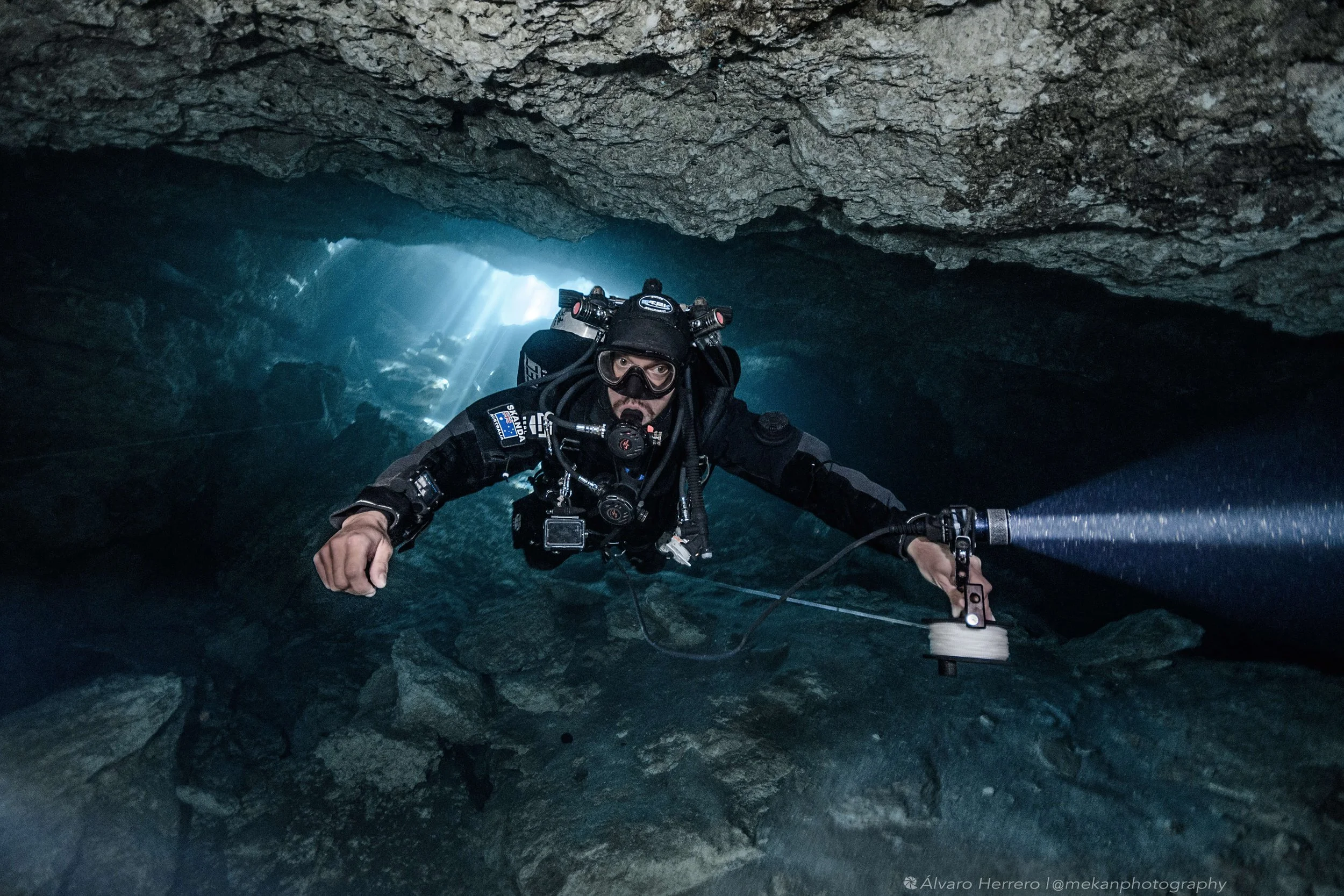
Cave divers learn to run primary reels to connect to fixed cave lines
Technical Diving Foundations: Sidemount or Twinset
Diver training has changed a lot since I took my Cavern course in 2011. Back then, I had some experience diving Twinset but no formal training in the configuration. Going into the course, I had to learn how to dive Twinset — or at least how to handle emergencies and problems systematically — at the same time as learning cavern skills. It was almost overwhelming.
I've since had many students arrive for cave training without a solid foundation in either Twinset or Sidemount. Instead of starting cave training, we end up spending a couple of days on foundational configuration skills, which can be frustrating and often means we don't have enough time to complete all the cave training. To set yourself up for success as a future cave diver, take a dedicated course in your chosen configuration first, and build up real experience diving it before you begin cave training.
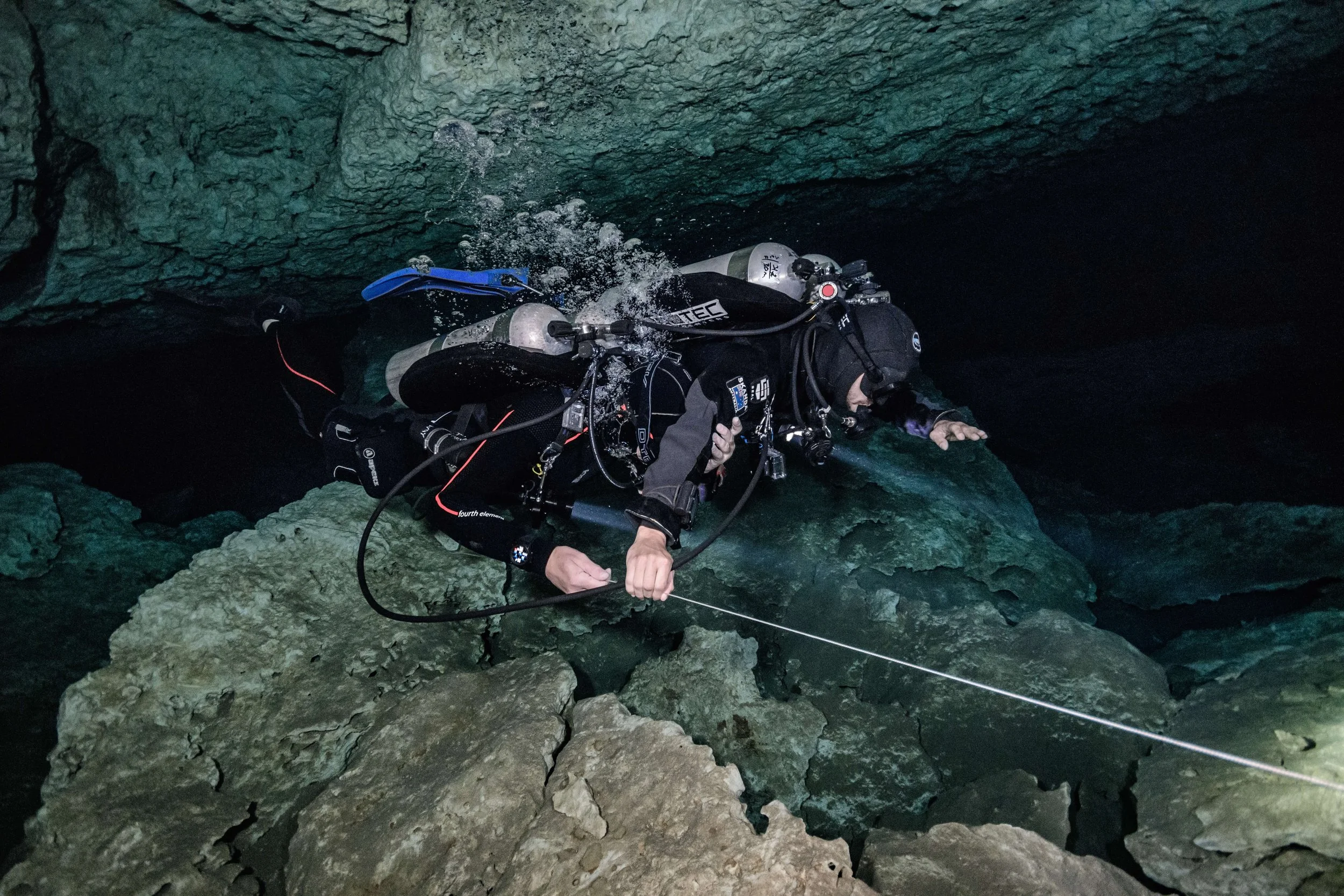
Skanda Coffield-Feith practicing zero visibility exits during cave diver training
RAID Cave 1 (Cavern and Intro to Cave)
Historically, many dive training agencies split their overhead environment curriculum into three separate courses:
Cavern
Intro to Cave
Full Cave
CAVERN is the most important of the three, since it packs in all the core protocols and procedures that set the foundation for becoming a cave diver — but on its own, it doesn't qualify you to dive independently. As a recreational diver, you can dive the cenotes in Mexico on a guided cavern tour, but since these are guide-only dive sites, even a Cavern-certified diver still needs a local guide.
For that reason, I very rarely teach Cavern as a standalone course. Most divers combine Cavern and Intro to Cave into a single program — which is exactly what RAID's Cave 1 course does (as does GUE). In Cave 1, divers learn to follow a guideline with and without visibility, dive as a team, plan cave dives, and respond to emergencies like gas leaks, out-of-gas situations, and light failures. Divers also learn to lay and repair guidelines, and how to respond to team separation or losing the line entirely.
Once certified, a Cave 1 diver can dive independently (with an appropriately trained teammate) using ⅓ of their starting gas, to a maximum distance of 300 meters from the cave entrance — a more generous limit than the ⅙ rule set by TDI.
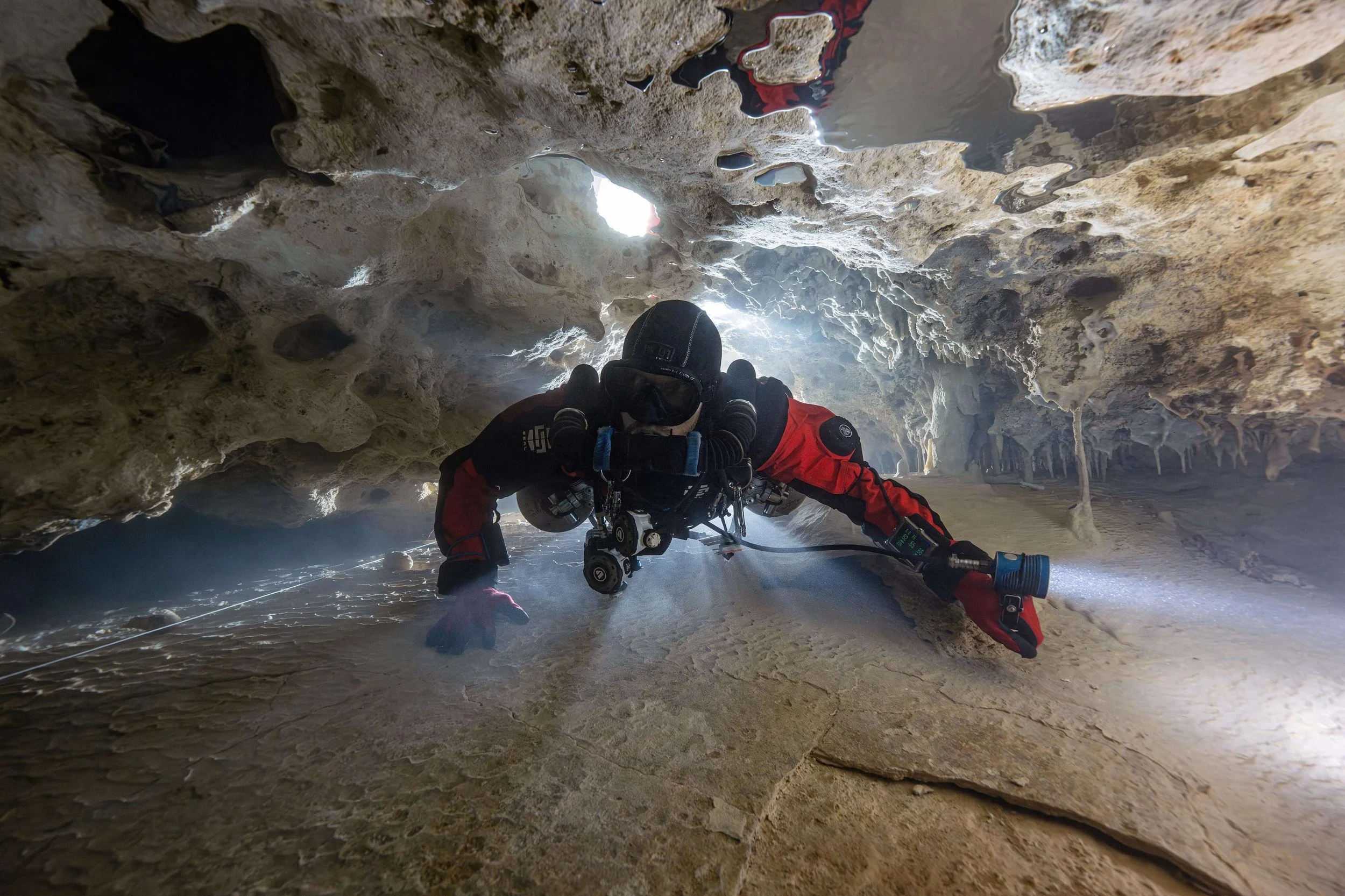
Skanda Coffield-Feith passing a restriction with visibility
RAID Cave 2 (Full Cave)
The RAID Cave 2 course is where cave diving shifts from the foundational dives into genuinely complex cave diving. Building directly on what you mastered in Cave 1, you'll learn to navigate complex navigation - using jump spools to get off the mainline to side tunnels, more complex T intersections, as well as traverses, and circuits. We will focus on the line-work skills needed to safely navigate branching passages and connect to different sections of a cave system, rather than simply following a single mainline in and out.
The course also deepens the entanglement management, line repair, and teammate rescue skills introduced in Cave 1 and raises them to a more demanding standard. Many Cave 2 programs — depending on prior decompression training — pair this with an introduction to stage cylinder use, extending both your range and your dive time, along with more advanced decompression theory for longer cave penetrations.
By the end of Cave 2, you're not just capable of surviving the overhead environment — you're equipped to navigate its complexity with confidence. That's exactly the skill set you need before stepping into full cave level diving in systems like Sac Actun and Ox Bel Ha (the two longest flooded cave systems in the world).
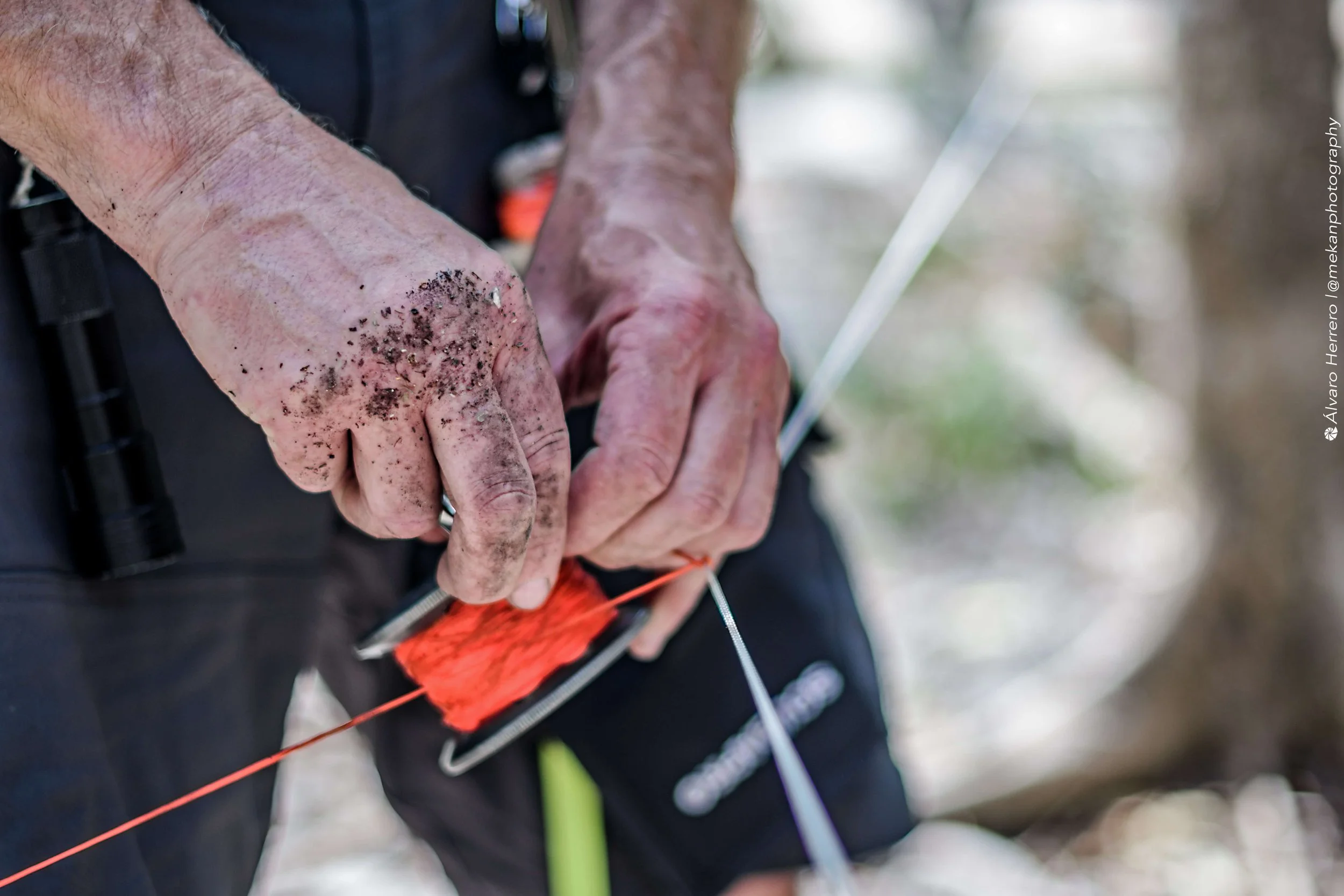
Practicing using jump spools on land before using them in the cave
Why Train for Cave 2 in Tulum
Tulum and the wider Yucatán Peninsula offer some of the most extensive and complex cave systems on the planet, which makes it an ideal classroom for Cave 2 training. Rather than practicing jumps, gaps, and tees in a generic training area, you're working through real, lined passages in cenotes that have decades of exploration history behind them.

Cave 2 introduces the possibility to use stage tanks to extend penetration
FAQ
What's the minimum experience needed before starting cave diver training?
Most agencies only require Open Water certification and 25 logged dives, but I recommend Advanced Open Water and Nitrox certification with at least 50 dives before starting Sidemount or Twinset training.
Do I need to learn Sidemount or Twinset before starting cave training?
Yes. Cave and technical diving require a redundant gas configuration — either Sidemount or Twinset — and it's best to build real experience in that configuration before beginning cave-specific training, rather than trying to learn both at once.
Can I dive cenotes in Mexico with just a Cavern certification?
Yes, but only on a guided tour with a local guide, since cenote cave sites are guide-only even for certified divers.
What's the difference between Cave 1 and Cave 2?
Cave 1 (Cavern and Intro to Cave) teaches the foundational protocols for diving safely along a single guideline, including emergency response, team diving, and dive planning. Cave 2 builds on that foundation with complex navigation — jumps, T intersections, traverses, and circuits — needed for full cave-level diving.
What are the prerequisites for RAID Cave 2?
You need a RAID Cave 1 certification (or equivalent from another agency), along with a minimum number of logged cave dives — 10 is a good number.
How long does the RAID Cave 2 course take?
Most divers complete Cave 2 over five days, combining academic sessions, dry-land drills, confined water drills and multiple cave training dives in cenotes.
Does Cave 2 include stage diving?
The Cave 2 programs can introduce stage cylinder use to extend range and dive time as long as divers have technical and decompression training. However, a Stage Cave course goes into this in much greater depth and allows more time to build experience and confidence diving Cave 2 dives without stage tanks.
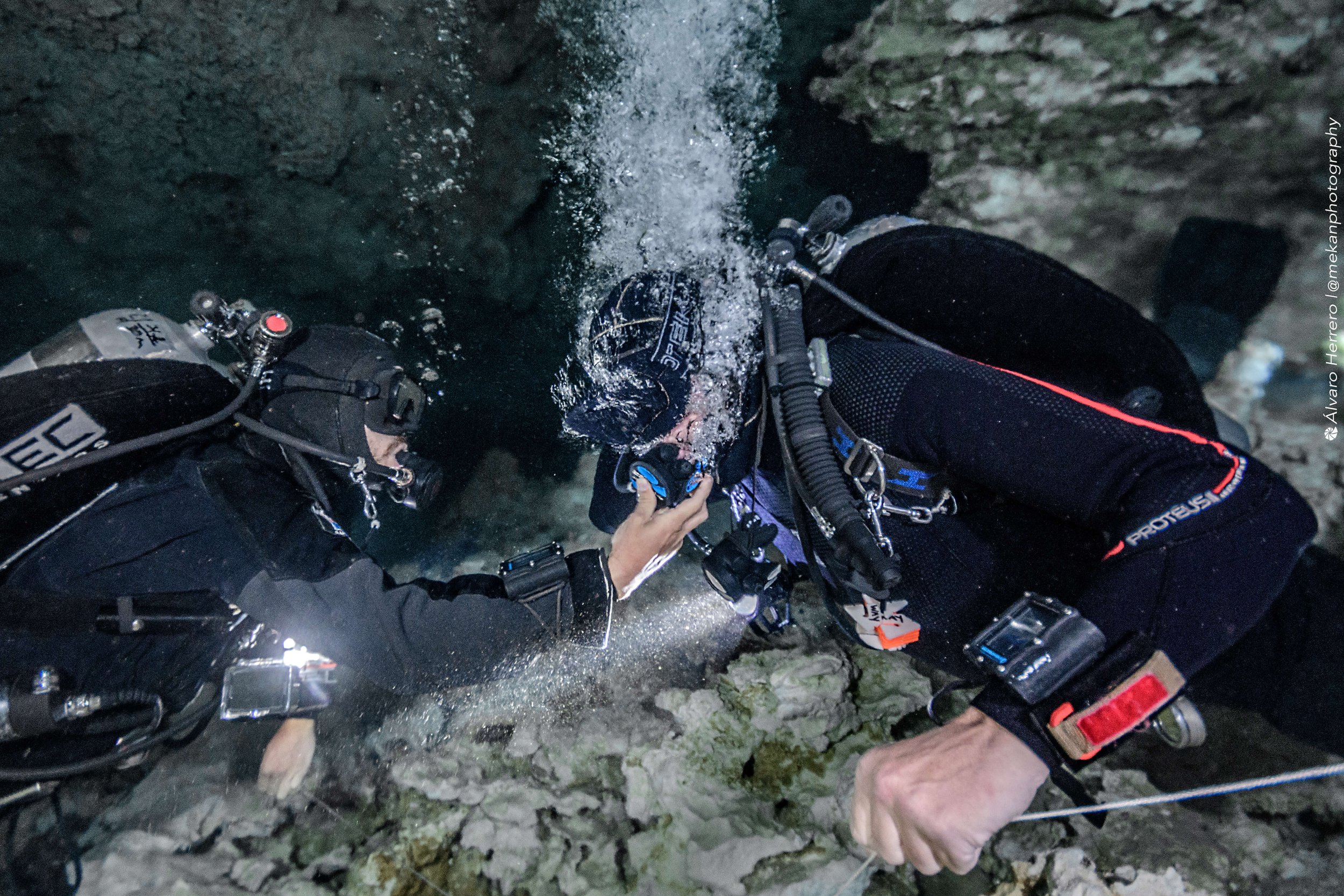
Cave Diver Training
Not cave trained yet? Contact me to discuss your training pathway.
