
Learning the Art of underwater Cave survey

The art of underwater cave survey with a slate.
During the Cave Diving Adventures hands-on Cave Survey Course, you will have the option to create your own survey slate, collect accurate survey data using a slate and the Mnemo Survey tool, use Ariane's Line computer software for cave survey for the first time, and leave with your first cave survey file.
Over the last few years, I have dedicated a great amount of time to surveying the caves I explore and to resurveying caves that I'm interested in and want to know better. Knowing the cave inside and out helps explorers plan how to push exploration forward, how to connect caves, and how to "read" the cave and understand how it develops. I want to share my knowledge and motivate people to survey as part of their journey in cave diving and cave exploration, so I created the Hands-on Cave Survey Workshop and taught it for many years at ProTec Dive Centers. It has evolved over the years, and the current Cave Diving Adventures course features more recent additions — Mnemo V2 and SpeleoDB survey management, for example!
I have conducted many survey workshops with divers from different parts of the world. Everyone has come to the workshops with different experiences and goals they wanted to achieve or take away from it. It is always a whole lot of fun spending time with other passionate divers, and for me, being able to pass on some of my experience and passion for cave survey is deeply rewarding!
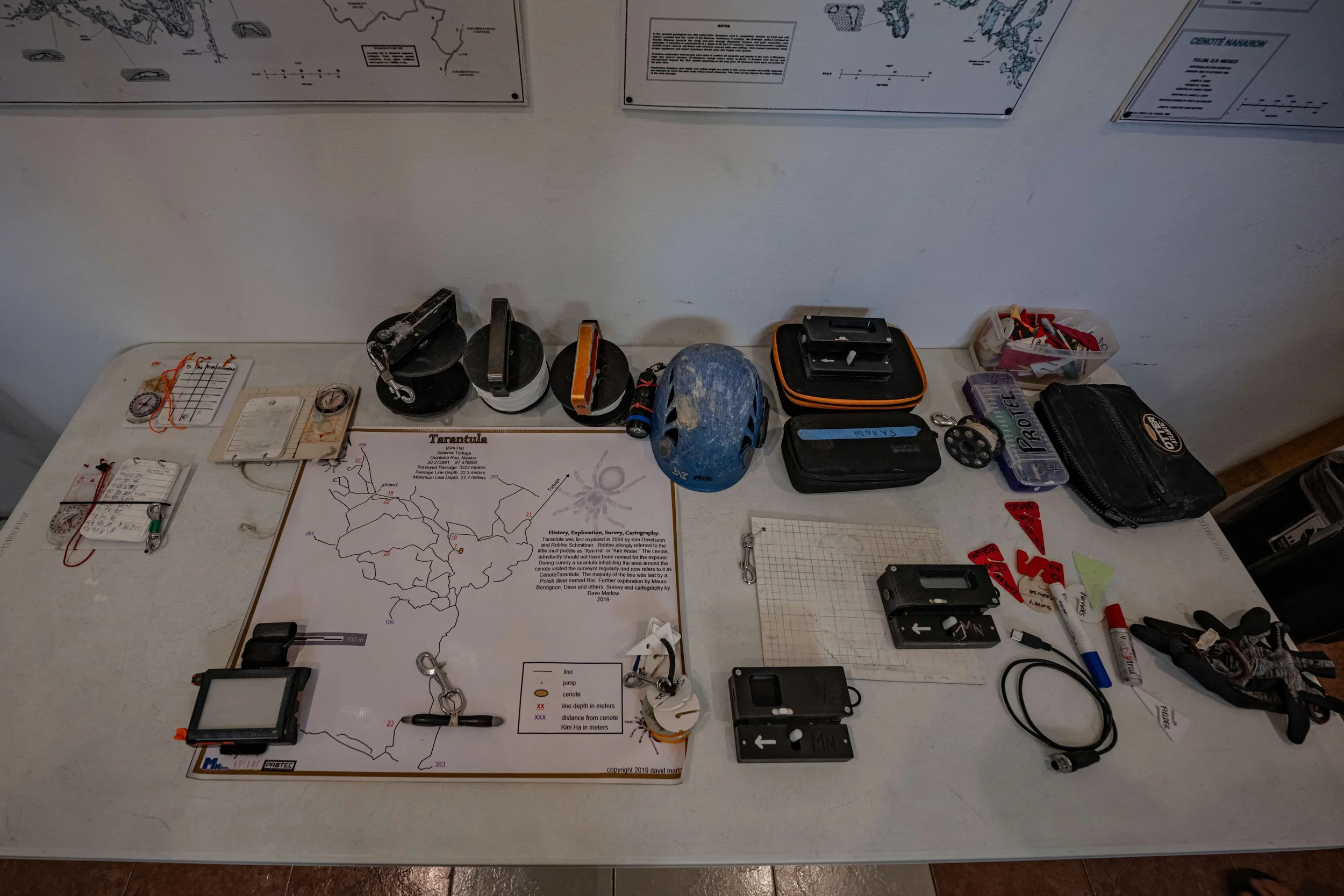
Equipment for cave survey!
Why Learn Cave Survey?
This workshop will give you an appreciation for well-laid lines, help you read and understand cave development, and give you the skills to begin your own resurvey project. For any meaningful exploration, a solid foundation of survey skill and experience is a must. If you don't survey, you don't know where you've been!
This is an advanced cave diving workshop, so experience is required. Being certified as a stage diver (or rebreather cave diver) is a good idea to make the most of the workshop. I can tailor the course to the interests of the individual diver — in the past I have had students who discovered new cave passages and wanted to be able to map them, and another who was involved in deep cave exploration and wanted to focus on just the Mnemo to gather data efficiently at depth. I can always prepare you for the course with instructional dives or a cave stage deco certification prior to the class. Typically, the course is taught over three days, focusing on manual hand survey — the old-school method (slates, compass, string) — while we leave the Mnemo survey tool for once you've mastered the art of manual survey.
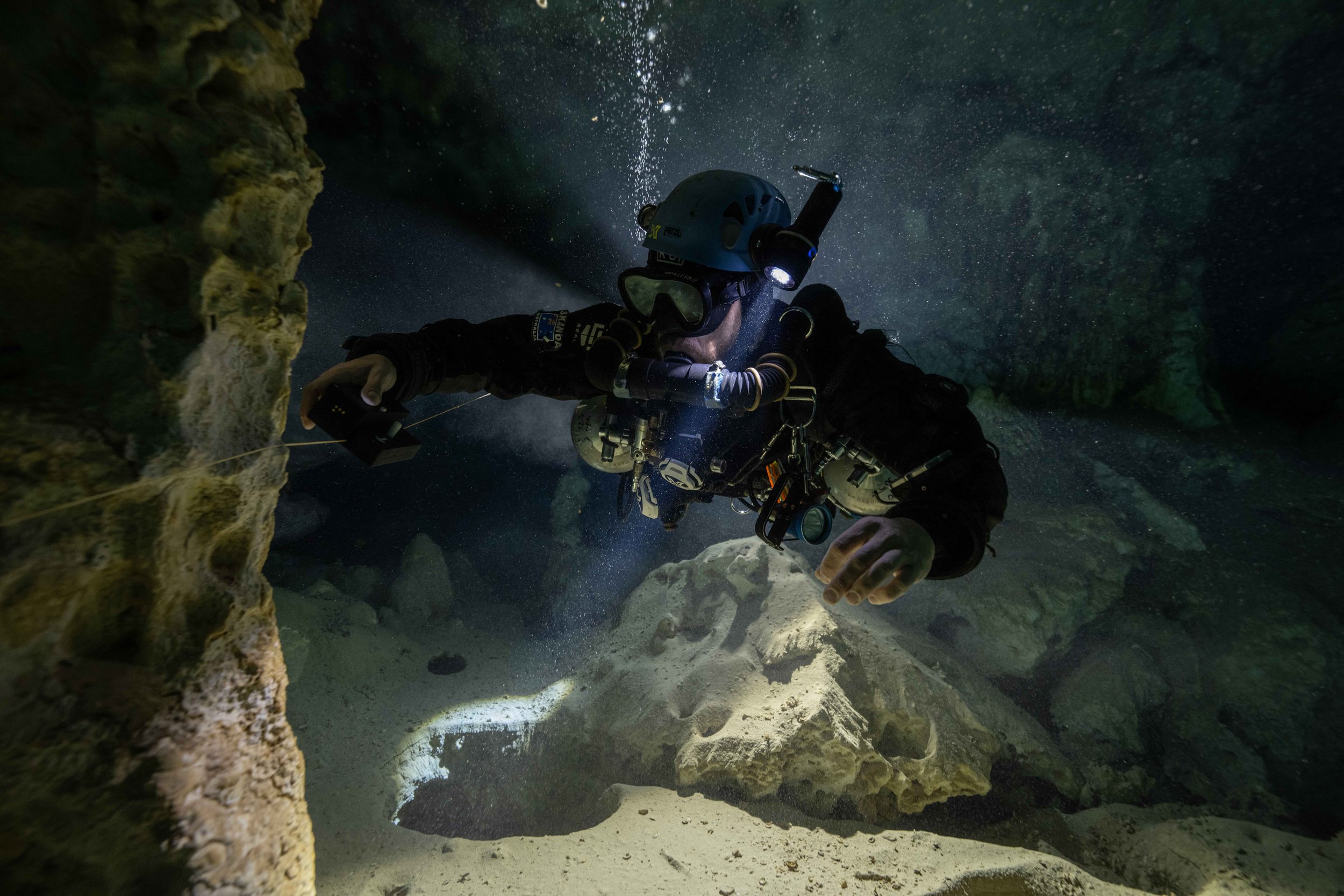
Skanda using Mnemo survey tool to resurvey cave line
Why and How Do We Survey?
On the first day, we cover how to survey, different schools of thought, roles in the team, and have a whole lot of productive discussion in the classroom. A thorough gear workshop follows, including making your custom survey slate.
Once the slate is ready, it is time to put into practice what we discussed in the classroom. I will set out a few cave lines for us to practice surveying on dry land. We treat the line as a new project, taking a GPS point and then surveying everything. A few tips and tricks along the way cover working with the slate and organising the data — then we're ready to pull the lines out and use cave survey software for the first time. Just to contrast the hand survey with the Mnemo tool, we also survey a few of the lines with it and compare accuracy.
Back in the classroom, it is time to see how the data looks. During the workshop, we discuss different cave mapping programs, but we use Ariane's Line. Data gets entered into the program and we see our work for the very first time! It's always interesting to see what the GPS accuracy can do to a survey! Once the manual survey is entered, we also put in the Mnemo data — the efficiency of data entry this way is remarkable! We then compare the manual and Mnemo surveys for accuracy.
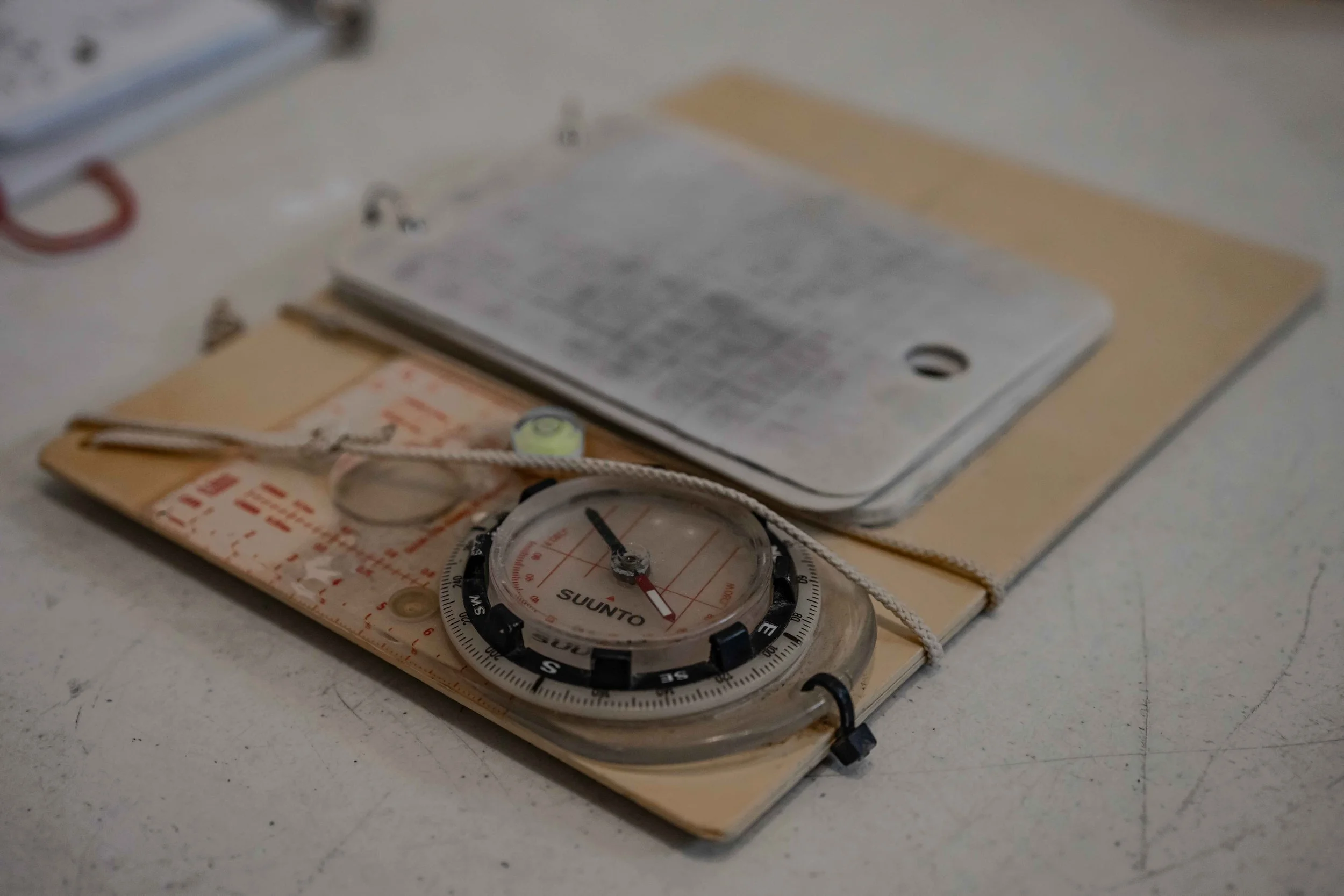
Skanda’s survey slate for manual survey
In-Water Survey Data Collection With a Slate
Now it is time to put everything into practice underwater! This is a simulated project from the beginning, to see how it all comes together. To really have a good opportunity to practice survey skills in a safe and conservation-friendly manner, we don't go directly into a full cave survey dive. Instead, we practice in the cavern zone of a cenote like Carwash or Cristal, or a cave where we can get a lot of practice, like Corazon. This gives students an opportunity to really focus on collecting good survey data without the stress of being far from the entrance. We can also set up additional lines in the cavern area and practice gathering different types of data.
Coming back to the classroom, it is time to enter the data into Ariane's Line. We are then able to look at how accurate the loops were, as well as the GPS coordinates. This is always the most interesting part — how accurate was the survey? Did it compare to what we expected? How easy or challenging was it to keep track of the different sections?
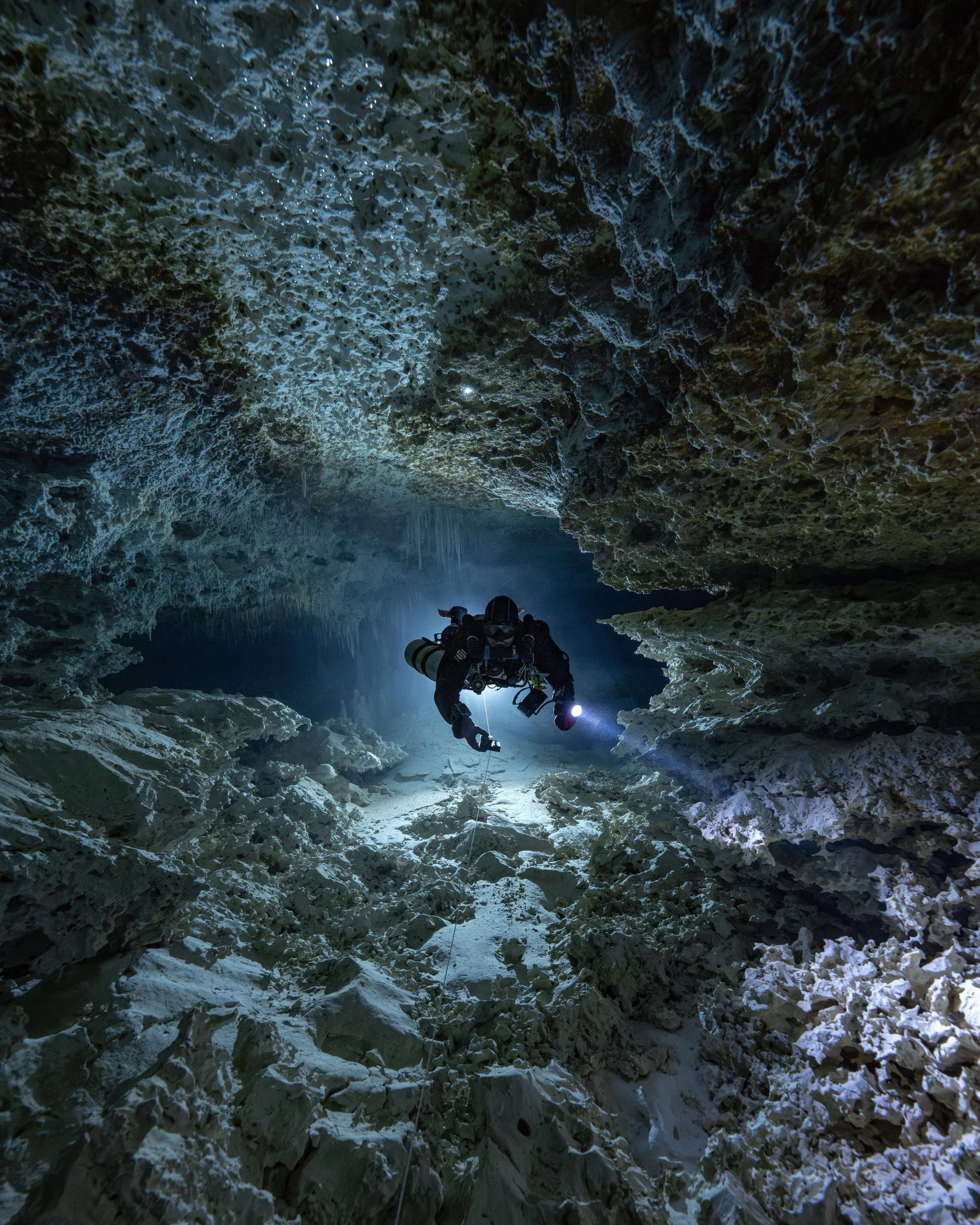
Skanda surveying a newly laid cave line
The Mnemo Survey Tool for cave survey
As the Mnemo survey tool has become more common, we spend a whole day using one to collect cave survey data. Having both a version 1 and a version 2 means we can try both, see the differences, and become familiar with each. If students join different survey projects where multiple Mnemos are being used, it is good to be familiar with both versions — this is the case with some recent students whose project uses five Mnemos for eight divers! I pick a location where I already have some data, where we can gather new data without impacting the cave. Once again, it is back to the classroom to enter the data into an existing survey. We then look at how to manage the survey data and introduce students to SpeleoDB to support data management.
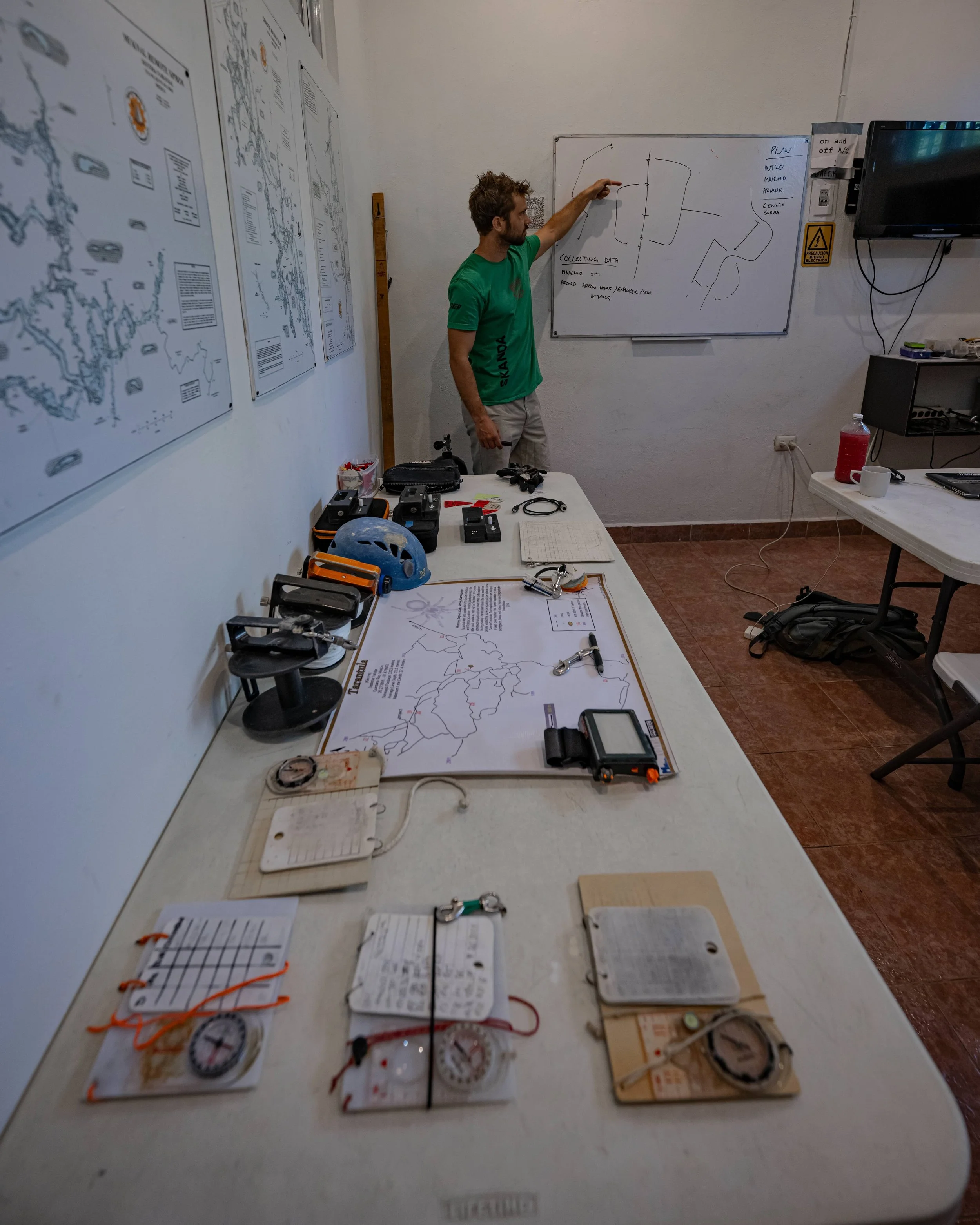
The classroom portion, learning about cave survey
Wrapping Up
Cave survey can have an impact on the cave environment, and from a conservation standpoint, we should always ask ourselves whether it is necessary. Many caves are already mapped or have been surveyed multiple times, so reaching out to local divers to identify a worthy project is always a good idea. This is a hands-on course that covers both the theoretical and practical sides of survey — but to really develop a solid grasp of the skills, practice is essential!
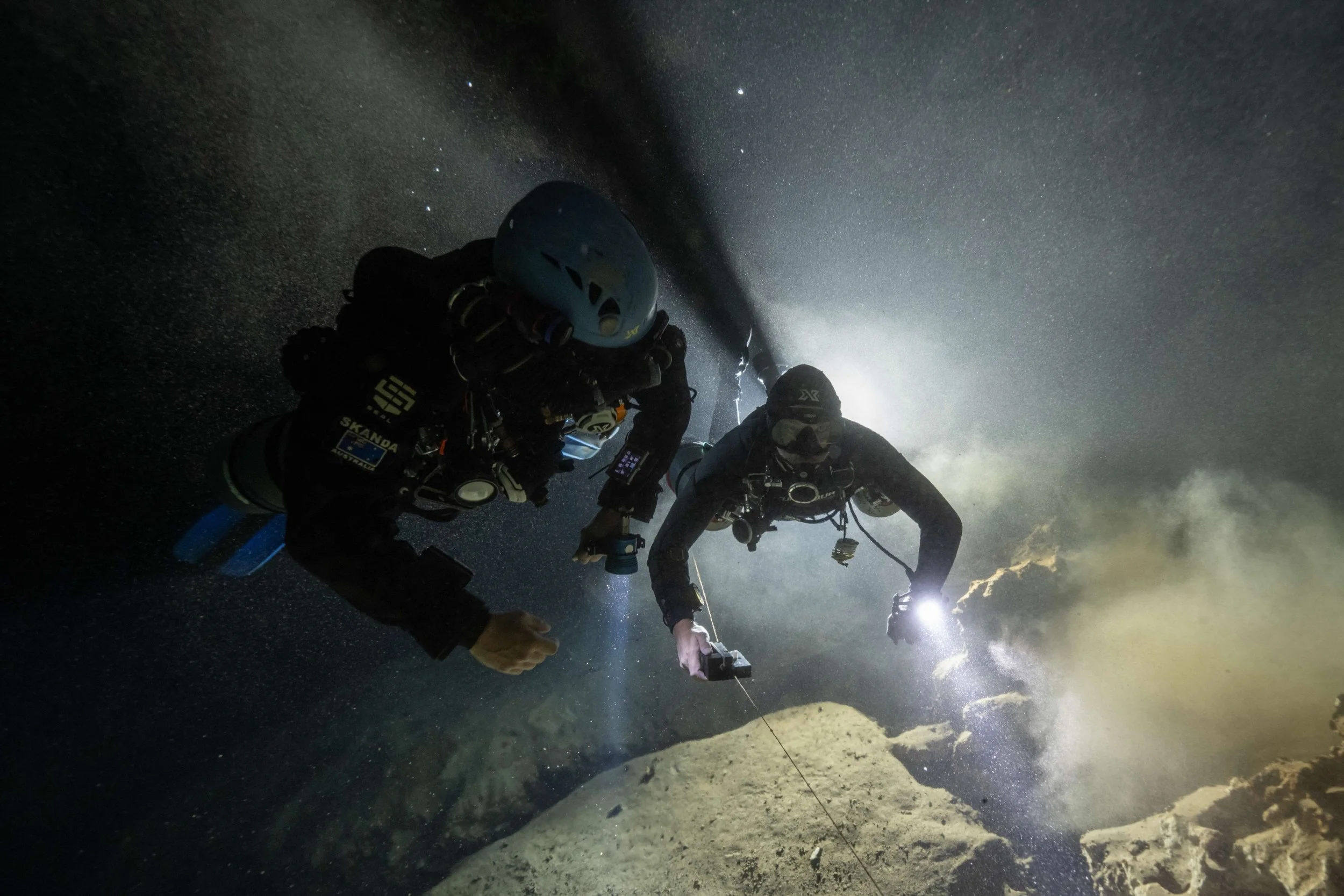
Cave survey in progress with an Mnemo Survey tool
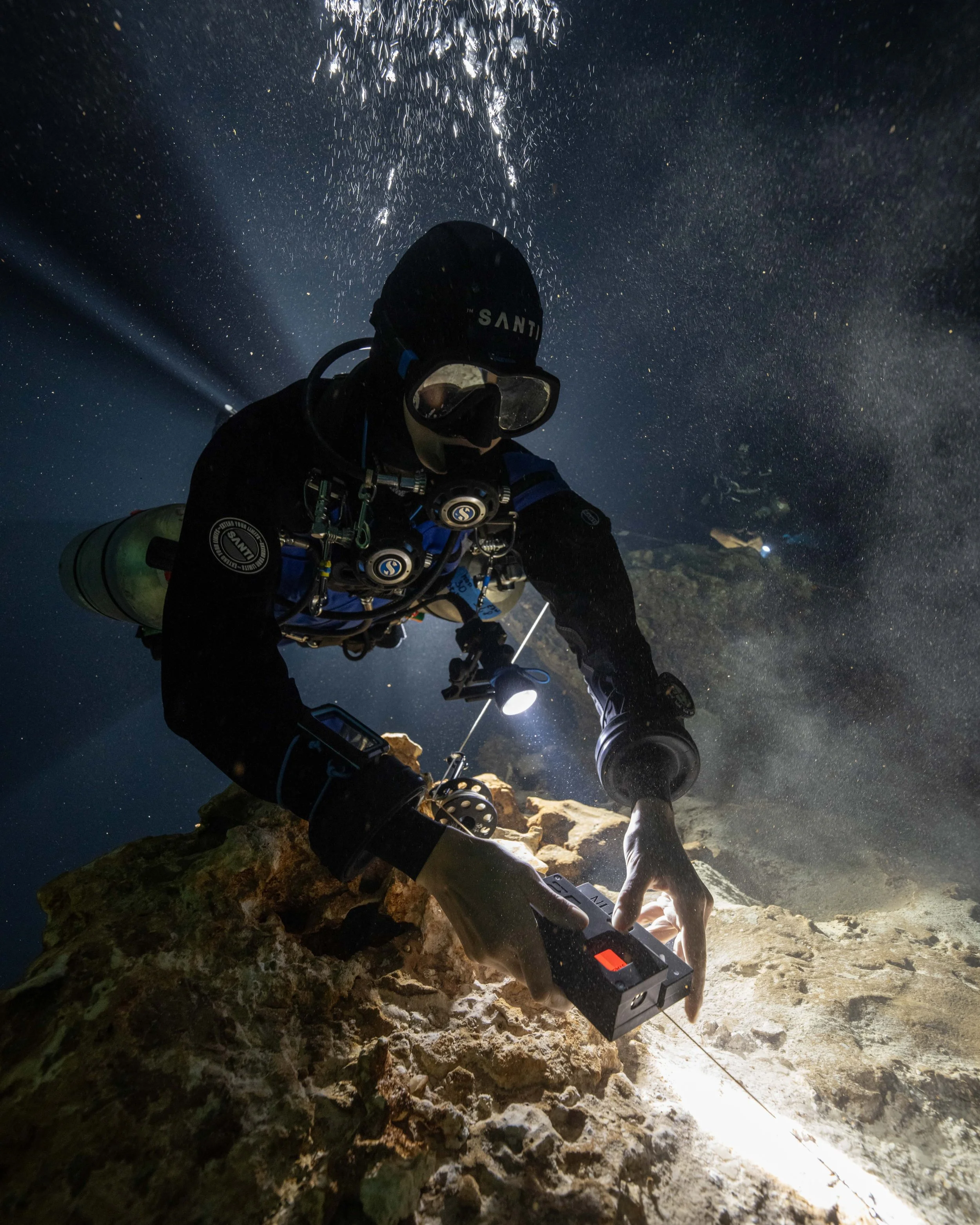
Ready to start Cave Survey Training?
